Pay in installments of $5.55 with
 ,
,
 and
and

Shipping Estimate
USA
- USA
- CAN
- USA
- CAN
Ships within 48 hours · Estimated delivery Aug 7 - Aug 12
 Promo Codes Available:
For Your Every Summer RSVP, with Code: SUMMER15
Description
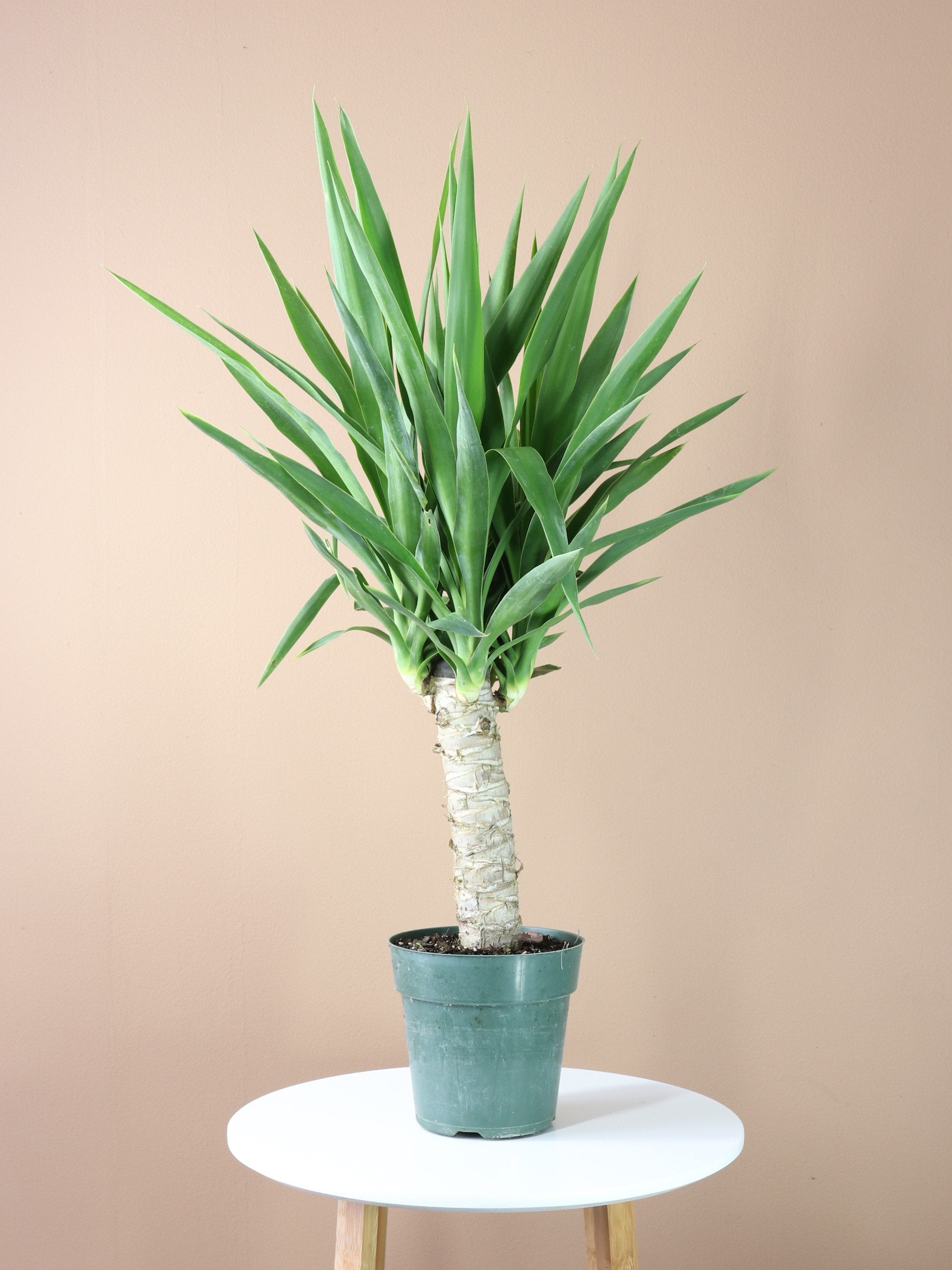
gal yucca cane plant Yucca Cane (Medium)Description Meet the Yucca the dramatic yet easygoing guy who brings serious southwestern swagger to your space! With his sword shaped leaves arranged in stunning rosettes and towering flower spikes, this rugged beauty turns any room into a desert oasis (without the heat stroke!). Native to the Americas and built for survival, your Yucca tree thrives on neglect (the dream plant for busy people!). He's like that low maintenance friend whos naturally
Description
Meet the Yucca – the dramatic yet easygoing guy who brings serious southwestern swagger to your space! With his sword-shaped leaves arranged in stunning rosettes and towering flower spikes, this rugged beauty turns any room into a desert oasis (without the heat stroke!).
Native to the Americas and built for survival, your Yucca tree thrives on neglect (the dream plant for busy people!). He's like that low-maintenance friend who’s naturally handsome and always looks effortlessly put-together – minimal fuss, maximum impact. With these statement-sized specimens for your living room, Mr. Yucca will spend decades making your space look intentionally designed rather than accidentally decorated.
Care
Are Yuccas hard to care for?
Yuccas are wonderfully easy to care for, making them perfect for both plant newbies and seasoned collectors. These resilient beauties forgive occasional neglect and thrive with minimal fuss, requiring just bright light and infrequent watering to stay happy.
Do Yuccas like full sun or shade?
Your Yucca plant absolutely loves bright light and thrives in full sun, though he'll tolerate partial shade like a champ. Indoors, position him near your sunniest window where he can soak up those rays and show off his dramatic form.
How often should you water Yuccas?
Water your Yuccas every two to three weeks during spring and summer, allowing the top few inches of soil to dry completely between drinks. In winter, reduce watering to once or twice monthly – he prefers being thirsty to soggy.
Where is the best place to keep a Yucca plant?
The best spot for your Yucca tree is near a bright, sunny window with excellent drainage and good air circulation. He loves showing off in entryways, living rooms, or any space where his dramatic silhouette can make a bold statement.
What is the best fertilizer to use for Yuccas?
Use a balanced, all-purpose fertilizer diluted to half strength every few months during the growing season for optimal Yucca plant care. Skip fertilizing entirely in fall and winter – he's perfectly content resting during the cooler months without extra nutrients.
Do Yuccas need misting?
Yuccas do not need misting and actually prefer dry indoor conditions that mimic their natural desert habitat. Misting can promote fungal issues, so keep that spray bottle away from this drought-loving desert dweller who thrives on neglect.
How long do Yuccas live for?
Your Yucca can live for decades with proper care, often reaching lifespans of fifty years or more in favorable conditions. He's the kind of plant companion who'll grow old with you, becoming more majestic and character-filled with each passing year.
Are Yuccas good indoor plants?
Yuccas make absolutely excellent indoor plants thanks to their striking sculptural form, incredible resilience, and remarkably low maintenance requirements. They're perfect dramatic statement pieces that transform spaces while tolerating the dry indoor conditions that challenge many other houseplants.
Pet-friendly?
Yuccas are not pet friendly, containing steroidal saponins that are toxic if ingested. Keep these dramatic beauties safely out of reach of curious pets who might be tempted to take an experimental nibble.
Are Yuccas poisonous to dogs?
Yuccas are poisonous to dogs due to toxic compounds called steroidal saponins found throughout the entire plant. If your pup decides to take a taste test, they may experience drooling, vomiting, diarrhea, and weakness requiring immediate veterinary attention.
Are Yuccas toxic to cats?
Yuccas are definitely toxic to cats, causing drooling, vomiting, diarrhea, and weakness if your feline friend decides to sample the foliage. Position your Yucca where curious kitties can admire his dramatic form from a safe, non-nibbling distance.
Factoids
What is a Yucca plant?
A Yucca plant is a perennial evergreen with dramatic rosettes of sword-shaped leaves and occasional tall spikes of white or cream flowers. Native to arid regions of North and Central America, these sculptural beauties belong to the asparagus family (surprise!).
Is Yucca a perennial or an annual?
Yucca is definitely a perennial plant, meaning he'll stick around for years (often decades!) rather than completing his life cycle in one season. This long-term commitment makes him an excellent investment for anyone wanting enduring sculptural drama in their space.
Is a Yucca a cactus?
A Yucca is not a cactus despite their shared love of dry conditions and desert vibes. While cacti belong to the Cactaceae family, Yuccas are proud members of the asparagus family, making them botanical cousins rather than siblings.
Are Yuccas poisonous to humans?
Yuccas contain saponins that are toxic to humans if ingested in significant quantities, potentially causing stomach upset, vomiting, and diarrhea. The bitter taste usually deters accidental consumption, but keep them away from curious children (and questionable adults).
Do Yucca plants multiply?
Yucca plants multiply by producing offshoots or pups around the base of the mother plant, which can be separated for propagation. Many species also form colonies through underground rhizomes, while others can be propagated from stem cuttings.
Can you eat Yucca?
You cannot eat the Yucca plant root, which contains high levels of toxic saponins and is often confused with edible yuca (cassava). However, some Yucca flower varieties are used in traditional Central American and Mexican cuisines with proper preparation.
Do Yuccas purify the air?
Yuccas help purify indoor air by removing toxins like formaldehyde and benzene from your environment, contributing to healthier indoor air quality for you and your family. So you get a beautiful and functional addition to your home or office space.
What part of Yuccas are medicinal?
The root of certain Yucca species, particularly Yucca schidigera, contains beneficial compounds used for their anti-inflammatory properties in supplements. However, the raw root itself is not safe for consumption and requires professional preparation. Leave medicine-making to experts!
Buy a Yucca
Looking to add some serious desert swagger to your space? Our handpicked Yuccas are perfect for anyone wanting to ditch boring decor for something with actual personality – no high-maintenance drama required.
Whether you're after a compact desktop companion or a towering statement piece that makes guests do double-takes, our live video shopping calls let you meet your perfect Yucca before he ships. Point, choose, and fall head-over-heels for the exact plant that'll transform your space from "meh" to "magnificent!" Plant matchmaking has never been this fun.
Shipping Notes
- Free Standard Shipping on $100+ Orders to the USA.
- Except Preorder products are shipped in 48 hours.
- Delivery to the USA:
- Standard Shipping : 3-10 business days
- If time is of the essence, please consider selecting expedited delivery for faster service.
Exchange/Return Notes
- We offer a 30-day return/exchange service after receiving.
- Final sale items are not eligible for returns or exchanges.
- To process your return/exchange, please contact us at [email protected]
- Please click here for more details>>> Return & Exchange Policy