Pay in installments of $5.79 with
 ,
,
 and
and

Shipping Estimate
USA
- USA
- CAN
- USA
- CAN
Ships within 48 hours · Estimated delivery Aug 6 - Aug 11
 Promo Codes Available:
For Your Every Summer RSVP, with Code: SUMMER15
Description
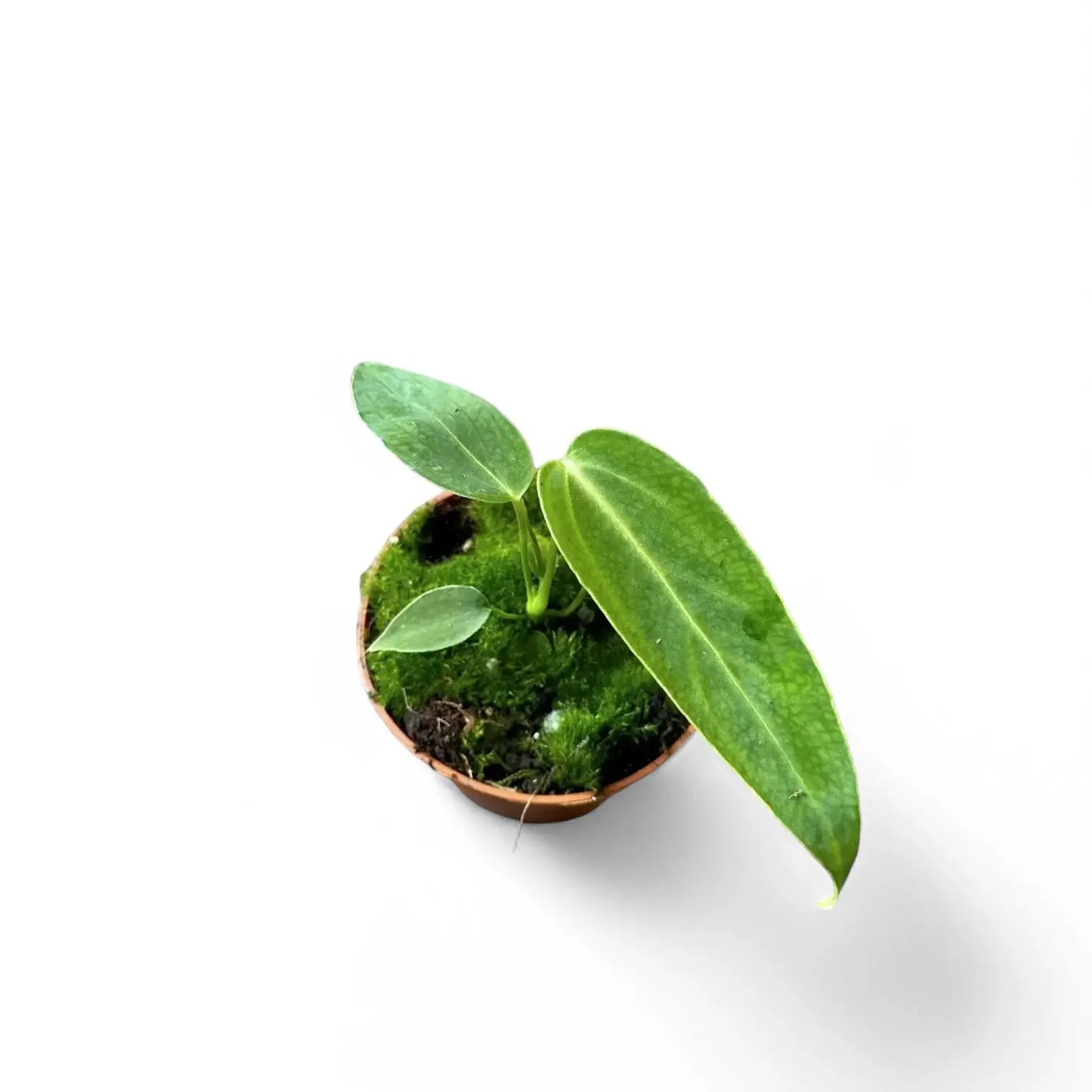
anthurium basilisk Anthurium warocqueanum × waterburyanum – Hybrid Queen-Type VelvetAnthurium warocqueanum waterburyanum Long, narrow velvet leaves shape Anthurium warocqueanum waterburyanum from the start. The blades develop a deep green surface, pale venation and a hanging growth direction that needs open space around and below the pot. The cross combines the elongated foliage associated with Anthurium warocqueanum with the Ecuadorian Anthurium waterburyanum parent. Indoors, the plant should sit where new blades can open and harden
Anthurium warocqueanum × waterburyanum
Long, narrow velvet leaves shape Anthurium warocqueanum × waterburyanum from the start. The blades develop a deep green surface, pale venation and a hanging growth direction that needs open space around and below the pot.
The cross combines the elongated foliage associated with Anthurium warocqueanum with the Ecuadorian Anthurium waterburyanum parent. Indoors, the plant should sit where new blades can open and harden without pressing against shelves, glass or nearby pots.
Long velvet leaf features
- Elongated foliage: The leaves have a narrow, hanging shape with a soft velvet surface.
- Pale vein pattern: Light veins run through the blade and become clearer as the leaf matures.
- Downward leaf movement: The leaves need room below and around the pot as they lengthen.
- Soft expanding blades: New leaves can crease or mark if they touch hard surfaces while unfurling.
- Epiphytic root behaviour: Thick roots need a loose, airy substrate with steady but never stagnant moisture.
- Space-sensitive growth: Open placement helps the long leaves expand without rubbing or folding against nearby surfaces.
Long-leaf growth and indoor placement
The leaf shape makes placement important. A shelf edge, plant stand or open bench can give the blades space to extend as they grow. If new leaves press against a wall or neighbouring plant, the soft velvet surface may crease before it has hardened.
The root zone should be open and oxygen-rich, similar to other velvet Anthurium with epiphytic tendencies. A heavy, compact mix keeps too much water around the roots and can weaken the crown before leaf symptoms become obvious.
Care for Anthurium warocqueanum × waterburyanum
- Placement: Give the leaves physical space below the pot and avoid narrow shelves where new blades can press against hard surfaces.
- Substrate: Choose a chunky Anthurium mix with bark, coarse mineral material and fibres that prevent the root zone from compacting.
- Humidity: Higher humidity helps long new leaves unfurl without sticking, tearing or drying at the edges.
- Water: Keep the substrate evenly moist but airy, with a slight dry-down at the top before the next watering.
- Light: Use bright filtered light. Direct sun can scorch long velvet leaves and dry the tips.
- Temperature: Keep the plant warm and protect it from cold drafts, cold water and cold wet substrate.
- Feeding: Feed lightly during active growth and keep the root zone flushed if salts collect in the mix.
Problems with long velvet leaves
- Creased new leaves: Long soft blades can crease if they rub against shelving, glass or other plants during expansion.
- Brown tips and margins: Dry air, irregular moisture or root stress can brown the edges of the elongated leaves.
- Loose crown: A wobbling base can point to root loss in a dense or overly wet mix.
- Scorch marks: Strong sun can leave pale dry patches on the velvet surface.
- Pests: Thrips, spider mites and mealybugs can hide along the midrib, petioles and undersides of long leaves.
Safety for Anthurium warocqueanum × waterburyanum
Anthurium is not safe for pets or children to chew. The plant contains calcium oxalate crystals, which can irritate the mouth, throat, skin and eyes after contact with sap or damaged tissue.
Botanical name background
The genus name Anthurium comes from Greek roots for “flower” and “tail”, referring to the spadix. Anthurium warocqueanum T.Moore was published in Florist and Pomologist in 1878 and is a Colombian epiphytic species.
Anthurium waterburyanum Croat & Scherber. was published in Aroideana 48(3):255 in 2025, in a revision of Anthurium section Cardiolonchium from Carchi Province, Ecuador.
Shipping Notes
- Free Standard Shipping on $100+ Orders to the USA.
- Except Preorder products are shipped in 48 hours.
- Delivery to the USA:
- Standard Shipping : 3-10 business days
- If time is of the essence, please consider selecting expedited delivery for faster service.
Exchange/Return Notes
- We offer a 30-day return/exchange service after receiving.
- Final sale items are not eligible for returns or exchanges.
- To process your return/exchange, please contact us at [email protected]
- Please click here for more details>>> Return & Exchange Policy