Pay in installments of $7.04 with
 ,
,
 and
and

Shipping Estimate
USA
- USA
- CAN
- USA
- CAN
Ships within 48 hours · Estimated delivery Aug 11 - Aug 16
 Promo Codes Available:
For Your Every Summer RSVP, with Code: SUMMER15
Description
monstera adansonii variegated laniata Monstera Adansonii Laniata VariegatedThe Monstera Adansonii Laniata Variegated is a subspecies step up from the standard Swiss Cheese Vine larger, glossier, more architectural, and considerably rarer. Monstera adansonii var. laniata differs from the standard species in ways that are immediately visible: the leaves are deeper, richer green with a high gloss finish on the underside (the standard adansonii is matte beneath), and the fenestrations the characteristic oval holes run in
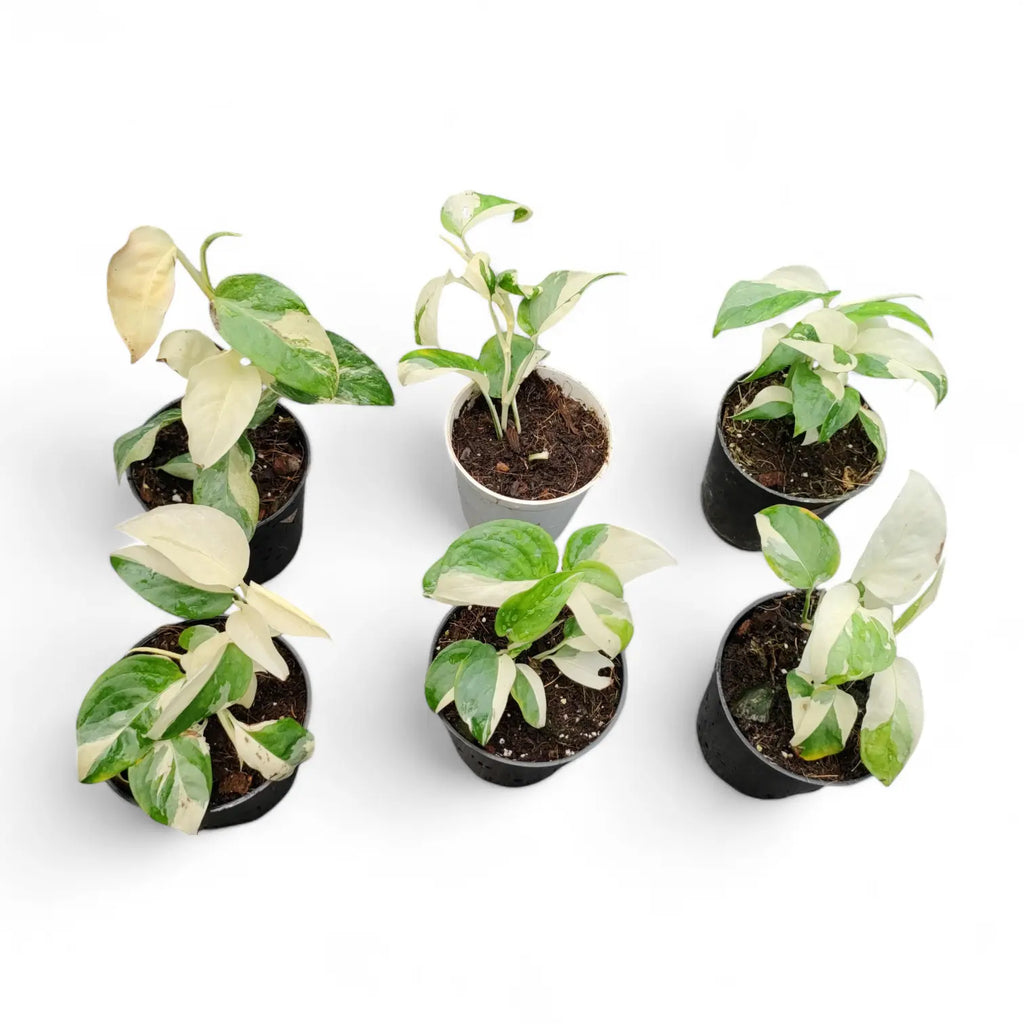
The Monstera Adansonii Laniata Variegated is a subspecies step up from the standard Swiss Cheese Vine — larger, glossier, more architectural, and considerably rarer. Monstera adansonii var. laniata differs from the standard species in ways that are immediately visible: the leaves are deeper, richer green with a high-gloss finish on the underside (the standard adansonii is matte beneath), and the fenestrations — the characteristic oval holes — run in symmetrical pairs along the midrib rather than scattered sporadically across the leaf, giving each leaf a distinctly organised, lace-like geometry. The name laniata is Latin for "woolly," referring to the fine texture on juvenile stems. In its variegated form, those dark, glossy, architecturally fenestrated leaves carry bold patches and marbled sections of cream to white — chimeric, unstable, and extraordinary. One of the rarest variegated Monsteras available.
Light
▾
Bright indirect light — essential for the variegated form. The cream and white sections cannot photosynthesise; the deep green areas must compensate. An east or west-facing window is ideal; a south-facing window with a sheer curtain works well. Gentle early morning direct sun is fine and beneficial. Harsh afternoon sun scorches the white sections. In low light variegation fades and growth slows considerably. A grow light at 12–14 hours is an excellent solution and produces large, dramatically variegated leaves.
Watering
▾
Allow the top 2–3 cm of substrate to dry before watering thoroughly. Use room-temperature filtered or rainwater and empty the saucer after each watering. The vigorous root system of the laniata means it expands quickly — check weekly during the growing season. In winter reduce to every 2–3 weeks. Given its root rot susceptibility, err on the side of slightly underwatering. For those who find watering calibration difficult, LECA semi-hydro is a strongly recommended alternative.
Humidity
▾
60–70% preferred. A humidifier nearby is ideal — the white and cream sections show humidity stress as browning edges sooner than the green areas. Keep away from AC vents and ceiling fans. Do not mist directly onto the leaf surface — water on white sections causes brown spotting. India's tropical climate is naturally beneficial; supplement with a humidifier in air-conditioned rooms.
Growing Media
▾
Chunky, extremely well-draining aroid mix — 40% potting soil, 25% orchid bark, 20% perlite, 15% coco coir. pH 5.5–7.0. Terracotta pot strongly recommended for its breathability. Always drainage holes — no exceptions. Alternatively, semi-hydro in LECA significantly reduces root rot risk and is particularly well-suited to this subspecies. Repot annually in spring; the vigorous laniata expands its roots quickly. Never an oversized pot — excess soil retains moisture the roots cannot use.
Feeding
▾
Balanced liquid fertilizer at half strength every 3–4 weeks in spring and summer. Apply only to moist substrate — never dry. The faster growth rate of laniata compared to standard adansonii means it benefits from consistent feeding during the growing season. Flush every 3 months to prevent salt accumulation. Stop feeding entirely in winter.
Root Rot — Yellow Leaves, Soggy Soil
▾
The most common and serious issue for this subspecies. Unpot immediately, trim all black and mushy roots with clean scissors, allow roots to air-dry for a few hours, then repot in fresh chunky mix in a terracotta pot. Water significantly less going forward. If root rot recurs, switch to LECA semi-hydro cultivation to eliminate the risk entirely.
Consecutive Green Leaves — Reversion
▾
Increase light immediately — insufficient light is the primary reversion trigger. If two or more consecutive leaves are predominantly green, prune back to the last strongly variegated node with a clean cut. New growth from that point typically resumes the white patterning. Resume consistent bright indirect light and regular feeding.
Brown Edges or Spots on White Sections
▾
Direct sun, low humidity, physical contact, or tap water minerals. Move to pure indirect light, boost humidity above 60%, switch to filtered water, and ensure leaves have clear space to unfurl without touching anything. White sections bruise permanently on contact — position the plant accordingly.
Leaves Losing Fenestrations
▾
Trailing instead of climbing, or insufficient light. Install a moss pole and redirect all growth upward. Ensure bright indirect light. The laniata's symmetrical midrib fenestration pattern is most pronounced in good light on an actively climbing specimen.
Thrips or Spider Mites
▾
Thrips: silver leaf streaking and distorted new growth — spinosad spray every 5–7 days for 4 weeks; quarantine immediately. Spider mites: fine webbing in low humidity — boost humidity and treat with neem oil or insecticidal soap every 5–7 days for 3 weeks. Inspect unfurling leaves at every watering.
📋 Quick Plant Profile
| Botanical Name | Monstera adansonii var. laniata 'Variegata' (syn. M. friedrichsthalii) |
| Name Meaning | laniata = Latin for "woolly" — fine texture on juvenile stems; adansonii after botanist Michel Adanson |
| Classification | Subspecies of M. adansonii — not a cultivar or form; a recognised botanical variety |
| Family | Araceae |
| Origin | Central and South America; tropical rainforest climber |
| ID vs Standard Adansonii | Glossy underside (adansonii is matte); symmetrical midrib fenestrations (adansonii is sporadic); deeper green; larger leaves |
| Variegation Type | Chimeric — unstable; cream to white patches and marbling; variable leaf to leaf; reversion possible |
| Root Rot Risk | Exceptionally high — terracotta pot and chunky mix essential; LECA semi-hydro strongly recommended |
| Light | Bright indirect; no direct afternoon sun; grow light excellent |
| Watering | Top 2–3 cm dry; filtered water; err toward underwatering; LECA eliminates rot risk |
| Humidity | 60–70%; humidifier preferred; no misting on leaves |
| Temperature | 18°C–27°C; no cold drafts; stable conditions preferred |
| Growth Rate | Faster and more vigorous than standard adansonii; one of the stronger-growing variegated Monsteras |
| Support | Moss pole essential — laniata's fenestration pattern and leaf size are most impressive when climbing |
| Reversion | Possible — prune to last variegated node if consecutive green leaves appear |
| Ideal For | Serious Collectors, Moss Poles, Bright Indoor Spaces, LECA Growers |
| Care Level | Intermediate to Advanced — root rot vigilance is the defining challenge |
Shipping Notes
- Free Standard Shipping on $100+ Orders to the USA.
- Except Preorder products are shipped in 48 hours.
- Delivery to the USA:
- Standard Shipping : 3-10 business days
- If time is of the essence, please consider selecting expedited delivery for faster service.
Exchange/Return Notes
- We offer a 30-day return/exchange service after receiving.
- Final sale items are not eligible for returns or exchanges.
- To process your return/exchange, please contact us at [email protected]
- Please click here for more details>>> Return & Exchange Policy