Pay in installments of $7.41 with
 ,
,
 and
and

Shipping Estimate
USA
- USA
- CAN
- USA
- CAN
Ships within 48 hours · Estimated delivery Aug 7 - Aug 12
 Promo Codes Available:
For Your Every Summer RSVP, with Code: SUMMER15
Description
howea forsteriana indoor plants Howea forsterianaHowea forsteriana Howea forsteriana, commonly called Kentia palm, is a slow growing, pinnate palm with long arching fronds and an open habit. Young plants are often grown with several seedlings in one pot, creating a fuller indoor specimen while each palm still keeps its own single stem. The leaflets are narrow, dark green and arranged along elegant fronds that soften as they mature. This palm grows steadily rather than quickly and keeps its shape for
Howea forsteriana
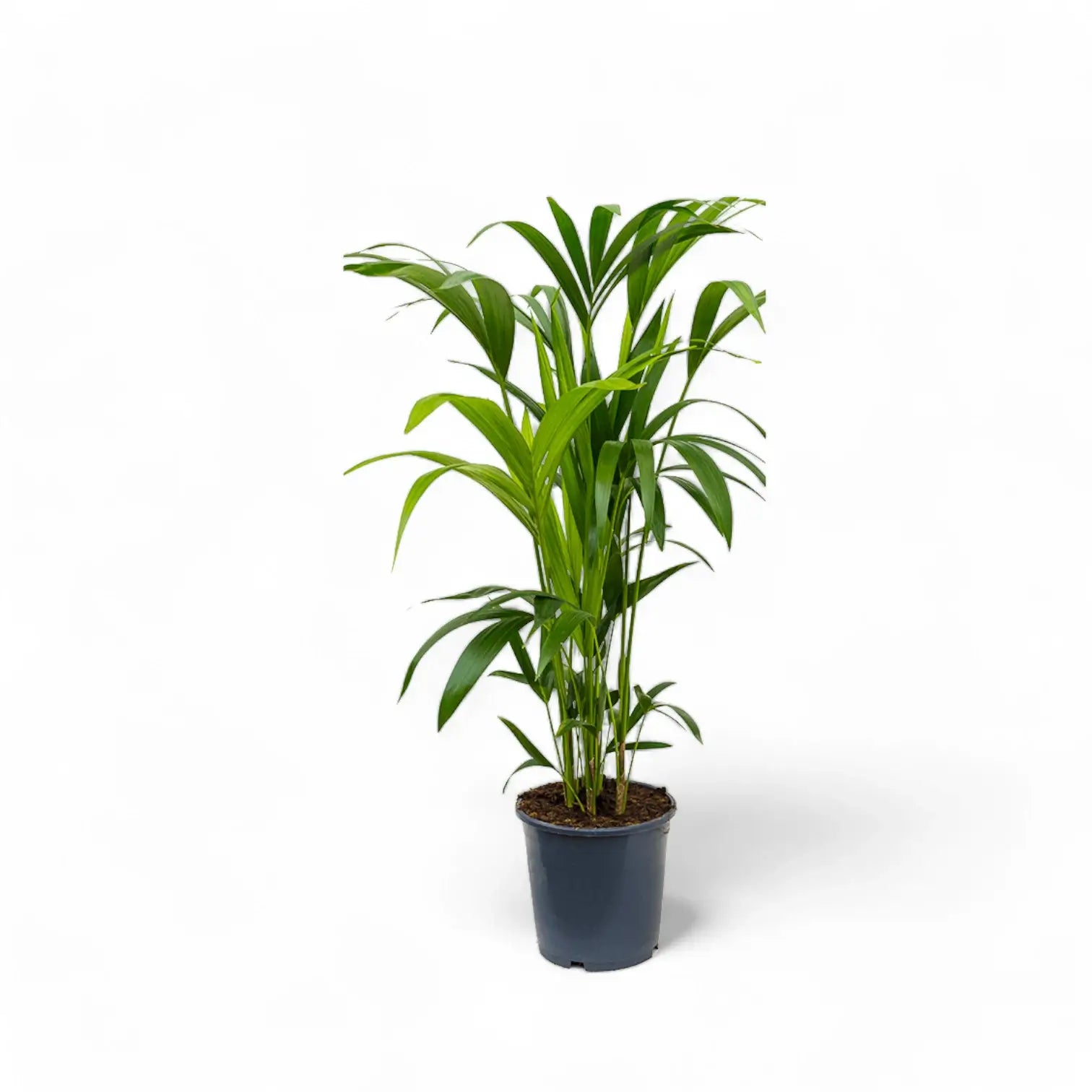
Howea forsteriana, commonly called Kentia palm, is a slow-growing, pinnate palm with long arching fronds and an open habit. Young plants are often grown with several seedlings in one pot, creating a fuller indoor specimen while each palm still keeps its own single stem. The leaflets are narrow, dark green and arranged along elegant fronds that soften as they mature.
This palm grows steadily rather than quickly and keeps its shape for years in a container. Its roots dislike rough disturbance, so consistent watering, a suitable pot and patient repotting matter more than constant feeding or moving.
Kentia palm fronds, stems and slow growth
- Growth habit: Single-stemmed palm, often planted in groups for a fuller indoor specimen.
- Leaves: Long pinnate fronds with narrow, drooping leaflets and a dark green finish.
- Growth speed: Slow and steady, making it suitable for long-term container growing.
- Origin: Endemic to Lord Howe Island, Australia.
- Pet safety: Listed by the ASPCA as non-toxic to cats and dogs.
Lord Howe Island origin and container habit
Howea forsteriana is a member of Arecaceae and comes from Lord Howe Island, a subtropical island in the Tasman Sea. Mature palms outdoors eventually form tall trunks, but indoor plants remain much slower and show their frond shape long before a visible trunk develops. Nursery-grown indoor specimens are commonly produced as grouped seedlings, which explains the fuller pot appearance compared with a solitary mature palm in habitat.
Low light slows growth, dry air can mark the leaflet tips and overwatering can damage roots that already grow slowly. A bright position with gentle light, careful watering and minimal root disturbance reduces brown tips, weak fronds and root stress.
Light, watering and root care for Howea forsteriana
- Light: Give bright, indirect light where possible. Howea forsteriana can tolerate lower light, but growth will be slower and the plant may produce fewer full fronds.
- Watering: Water when the upper 25–35% of the substrate has dried. Soak evenly, then let excess water drain fully.
- Substrate: Use a well-drained palm or houseplant mix with added mineral material such as pumice or perlite to keep oxygen around the roots.
- Temperature: Keep in a stable indoor range, ideally around 16–28 °C. Protect from cold draughts and cold, wet substrate.
- Humidity: Average indoor humidity is usually tolerated, but very dry air can brown leaflet tips. A humidifier is more reliable than wetting the leaves.
- Feeding: Feed lightly during active growth. Palms can react badly to excess fertiliser salts, so use modest doses rather than strong, frequent feeding.
- Repotting: Repot only when clearly root-filled. Handle the root ball gently and move up one pot size at a time.
Kentia palm frond problems to catch early
- Brown leaflet tips: Often linked to dry air, irregular watering, fertiliser salts or old frond age. Check the newest growth before assuming the whole plant is declining.
- Yellowing fronds: One old lower frond yellowing slowly is normal. Several yellowing fronds at once can indicate overwatering, poor drainage or low root oxygen.
- Spider mites: Fine speckling, dull fronds and webbing point to mites, especially in warm dry conditions. Rinse leaves and treat early.
- Weak, stretched growth: Usually caused by too little light. Move gradually into a brighter indirect position rather than into direct midday sun.
- Root stress after repotting: Wilting or stalled growth after repotting can come from damaged roots. Keep the plant stable and avoid repeated pot changes.
Long-term handling for a slow palm
Howea forsteriana develops slowly and should be handled with minimal root and frond disturbance. Rotate the pot occasionally so fronds develop evenly, remove fully brown fronds at the base and avoid cutting green fronds simply to reshape the plant. A deep, stable pot helps support the weight of the fronds as the plant matures.
Pet safety and frond placement
Howea forsteriana is listed as non-toxic to cats and dogs. Even so, chewing large amounts of plant material can still cause stomach upset, and the long fronds are better kept out of busy traffic paths where they may be bent or torn.
Howea forsteriana name background
Howea is named for Lord Howe Island, the native home of the genus. The species epithet forsteriana honours William Forster, a 19th-century senator of New South Wales. The common name Kentia palm is also connected with Lord Howe Island, where Kentia is the island’s main settlement.
Howea forsteriana develops slowly into an arching Kentia palm with dark green pinnate fronds in a deep, stable pot.
Shipping Notes
- Free Standard Shipping on $100+ Orders to the USA.
- Except Preorder products are shipped in 48 hours.
- Delivery to the USA:
- Standard Shipping : 3-10 business days
- If time is of the essence, please consider selecting expedited delivery for faster service.
Exchange/Return Notes
- We offer a 30-day return/exchange service after receiving.
- Final sale items are not eligible for returns or exchanges.
- To process your return/exchange, please contact us at [email protected]
- Please click here for more details>>> Return & Exchange Policy