Pay in installments of $5.24 with
 ,
,
 and
and

Shipping Estimate
USA
- USA
- CAN
- USA
- CAN
Ships within 48 hours · Estimated delivery Aug 11 - Aug 16
 Promo Codes Available:
For Your Every Summer RSVP, with Code: SUMMER15
Description
cliffhanger succulent Cotyledon pendensIntroducing the cliff cotyledon, known as Cotyledon Pendens, a vibrant member of the Cotyledon genus and Crassulaceae family; and is good for hanging baskets. Native to South Africa, it is named "Cliff Cotyledon" because of its shape and its natural habitat preference for rocky cliffs and slopes. In the wild, you can often find this trailing plant growing on the edges of cliffs or hanging from rocky ledges, where it receives full sun and summer
Introducing the cliff cotyledon, known as Cotyledon Pendens, a vibrant member of the Cotyledon genus and Crassulaceae family; and is good for hanging baskets. Native to South Africa, it is named "Cliff Cotyledon" because of its shape and its natural habitat preference for rocky cliffs and slopes. In the wild, you can often find this trailing plant growing on the edges of cliffs or hanging from rocky ledges, where it receives full sun and summer rainfall.
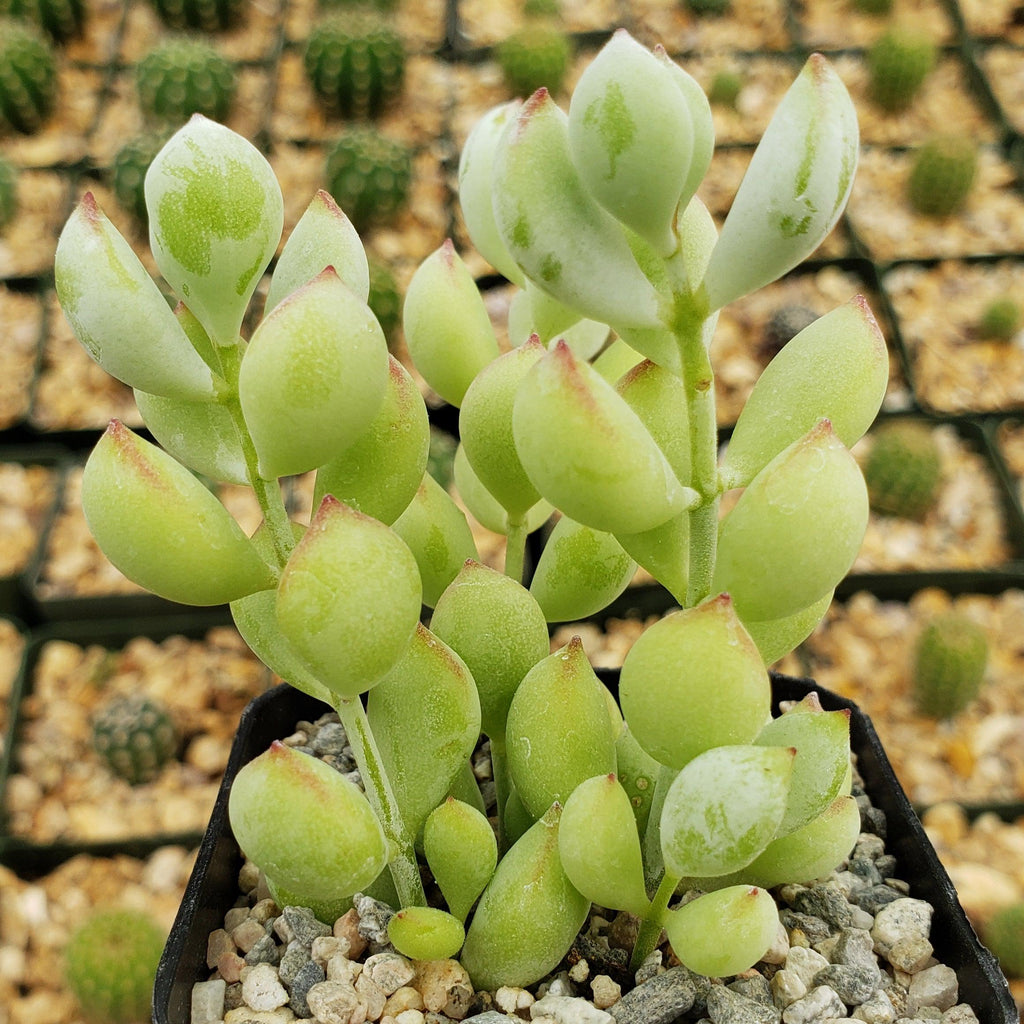
Cotyledon pendens is a branched, succulent shrublet with teardrop-shaped leaves on dense, trailing stems that branch from nodes and can grow up to 2 feet long. As they mature, the stems become woody with brownish bark. When grown in direct sunlight, the powdery, glaucous coating on the light green leaves turns bright red around the edges. They are attached to the stem with a short petiole and initially sparsely covered with glandular hairs, but become hairless as they mature, giving them a smooth surface.
When it comes to flowering, this species Cotyledon Pendens produces small, tubular bell-shaped flowers that hang down from the stems during summer. The flowers are typically orange red in color and can add a beautiful splash of color to the plant. However, it's worth noting that flowering in this species is relatively rare when grown indoors.
Propagation of Cotyledon Pendens can be done through stem cuttings. All you have to do is take a healthy stem cutting, let it callus and dry for a few days, and then plant it in well-drained soil. With proper care, the cutting will develop roots and grow into a new Cotyledon plant.
Watering Needs
When it comes to watering your Cotyledon pendens, they are adapted to survive in arid environments, so they don't need frequent water supply as other houseplants. When you do water your Cotyledon plant, make sure to give it a thorough soak.
In the spring and early summer, during the growing season, water is deep enough to allow excess water to drain through the drainage holes, and then allow the soil to completely dry before watering again. Avoid leaving the plant sitting in standing water, as this wet soil can also lead to root rot. It's better to err on the side of underwatering because overwatering can cause root rot and other problems. A good rule of thumb is to water your Cotyledon pendens when the top inch of soil feels dry to the touch.
In the late summer, during the dormant phase, you'll want to reduce the frequency of watering. It requires less water during this time, so adjust your watering schedule accordingly.
Light Requirements
When it comes to growing Cotyledon pendens cliff cotyledon indoors, it thrives in bright, indirect light. Place it near a sunny window or under a grow light, where it can receive plenty of bright light throughout the day. However, be cautious of placing it in direct sunlight, as the intense rays can scorch the leaves. If you notice that your Cotyledon pendens plant is stretching or leaning towards the light, it may be an indication that it needs more light.
If growing Cotyledon pendens outdoors, it prefers partial shade to full sun. It can tolerate a few hours of direct sunlight in the morning or late afternoon, but it's best to provide some shade during the hottest part of the day. If you live in a region with intense summer heat, providing some afternoon shade can help protect your Cotyledon succulent from sunburn.
Remember, the light requirements of Cotyledon pendens may vary depending on your specific climate and the conditions in your home or garden. It's always a good idea to observe your Cotyledon plant and make adjustments accordingly.
Optimal Soil & Fertilizer
Cotyledon pendens favors very airy, sandy soil that drains well. Planting them in ordinary porous soil without good drainage will result in compacted roots, stunted growth, and most likely root rot. Instead, make or buy a well-draining succulent soil, or ideally use our specialized succulent potting mix that contains 5 natural substrates and mycorrhizae to promote the development of a strong root system that helps your Cotyledon succulent to thrive.
Like other succulents, Cotyledon Pendens doesn't require frequent feeding or any ordinary fertilizer. During the active growing season, which is typically spring, you can fertilize the plant once a year. Use a balanced (5-10-5), water-soluble NPK fertilizer specifically formulated for succulents. Follow the instructions for the proper dilution ratio.
Remember, it's important not to over-fertilize succulents, as this can lead to excessive growth and weak stems. Always err on the side of caution and use a diluted fertilizer solution. During the winter months, when Cotyledon pendens is in its dormant phase, you can reduce or even stop fertilizing altogether. By providing well-draining soil and occasional fertilization, you can help ensure that your Cotyledon Pendens remains healthy and happy.
Hardiness Zone & More
When growing Cotyledon pendens indoors, it is important to maintain a temperature range of around 60-75°F. It prefers average room temperatures and can tolerate slightly cooler temperatures at night. Avoid exposing it to extreme temperature fluctuations or drafts, as this can stress the Cotyledon pendens plant.
Cotyledon Pendens is quite adaptable and can tolerate lower temperatures and average indoor humidity levels. However, it does appreciate some humidity, especially during drier winter months or in arid climates. You can increase humidity around the plant by placing a tray of water nearby or using a humidifier.
If you are living in USDA zones 9-11, you can grow your Cotyledon pendens outdoors year-round. It thrives in temperatures ranging from 65-85°F. If you live in a colder climate, it's best to keep Cotyledon Pendens indoors or provide it with protection during frost, if the temperature drops below 20 F. Cotyledon Pendens can tolerate a wide range of humidity levels. It can adapt to both dry and humid environments, making it a versatile choice for outdoor gardens in various climates.
The Bottom Line
Overall, the Cotyledon pendens is a unique and eye-catching succulent plant. With its trailing stems and fleshy, teardrop-shaped leaves, it adds a touch of whimsy to any space or in a hanging basket. This Cotyledon plant is relatively low maintenance, making it a great choice for both beginner and experienced plant enthusiasts. It thrives in full sunlight to partial shade and prefers well-draining soil. When it comes to watering, it's best to allow the top inch of soil to dry out before watering again to prevent root rot. Additionally, you can grow it outdoors year-round in USDA zones 9-11. Overall, with the right care and attention, Cotyledon Pendens can be a beautiful and rewarding addition to your indoor or outdoor plant collection.
Shipping Notes
- Free Standard Shipping on $100+ Orders to the USA.
- Except Preorder products are shipped in 48 hours.
- Delivery to the USA:
- Standard Shipping : 3-10 business days
- If time is of the essence, please consider selecting expedited delivery for faster service.
Exchange/Return Notes
- We offer a 30-day return/exchange service after receiving.
- Final sale items are not eligible for returns or exchanges.
- To process your return/exchange, please contact us at [email protected]
- Please click here for more details>>> Return & Exchange Policy