Pay in installments of $6.88 with
 ,
,
 and
and

Shipping Estimate
USA
- USA
- CAN
- USA
- CAN
Ships within 48 hours · Estimated delivery Aug 8 - Aug 13
 Promo Codes Available:
For Your Every Summer RSVP, with Code: SUMMER15
Description
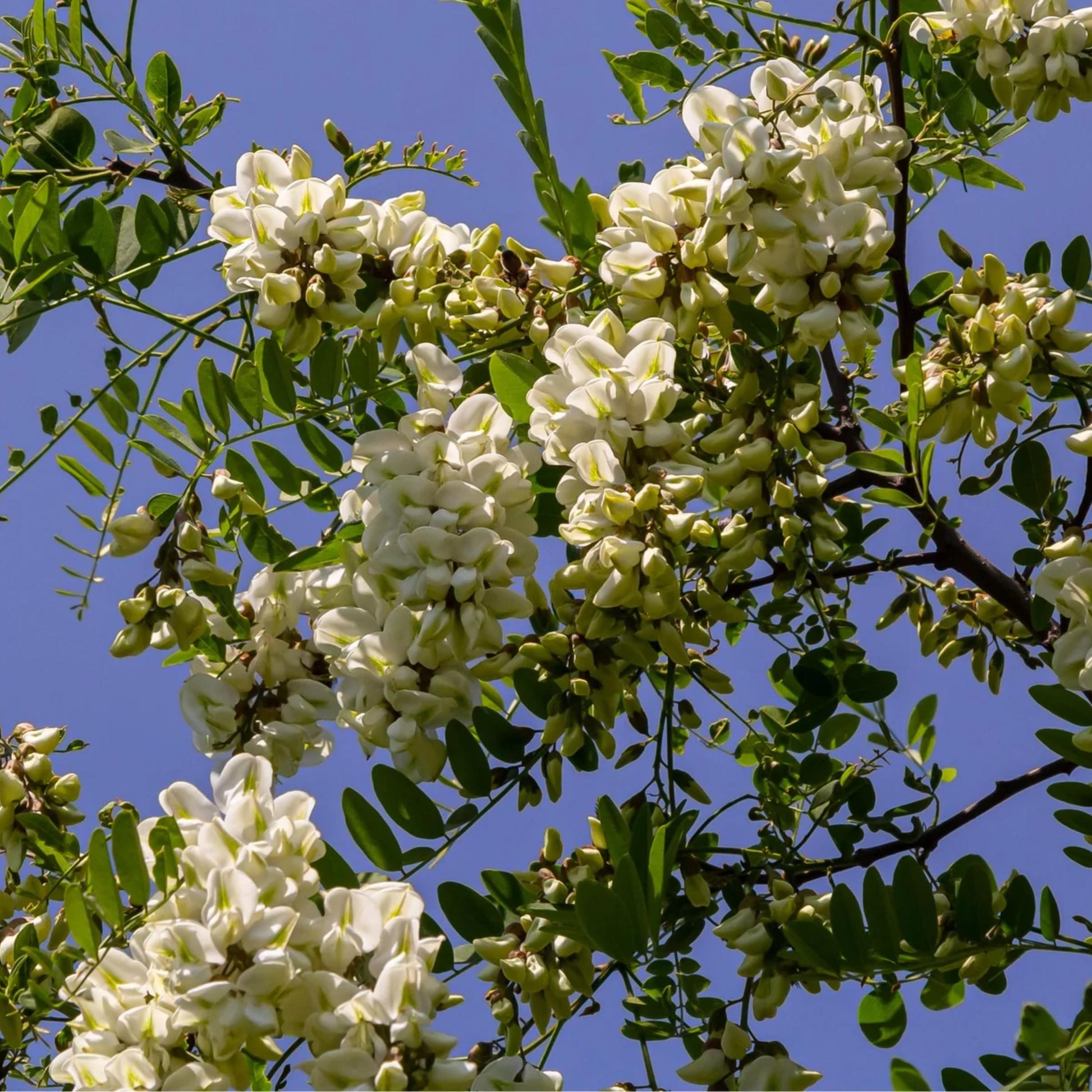
honey locust tree bonsai Thornless Honey Locust Tree Seeds — Gleditsia inermisFast shade. Zero maintenance. The tree that does it all without the thorns. Gleditsia triacanthos var. inermis, the Thornless Honey Locust, is the most practical large shade tree available to the North American landowner who wants fast results with minimal fuss. It casts light, dappled shade that allows grass to grow beneath it. Its feathery compound leaves emerge late in spring and drop early in fall, disappearing into the lawn without raking. It
Fast shade. Zero maintenance. The tree that does it all without the thorns.
Gleditsia triacanthos var. inermis, the Thornless Honey Locust, is the most practical large shade tree available to the North American landowner who wants fast results with minimal fuss. It casts light, dappled shade that allows grass to grow beneath it. Its feathery compound leaves emerge late in spring and drop early in fall, disappearing into the lawn without raking. It tolerates drought, compacted soils, road salt, air pollution, and urban heat that would stress or kill most other large shade trees. And it grows fast enough to provide meaningful canopy within a few years of planting. If you are looking to buy Thornless Honey Locust seeds or grow this adaptable native shade tree from seed, this is the tree that solves the most common landscaping problems simultaneously.
- One of the fastest-growing large native shade trees available, gaining 3 to 7 feet per year in ideal conditions
- Casts light, dappled shade that allows grass and underplantings to thrive beneath the canopy
- Feathery compound leaves emerge late, drop early, and disappear quickly without creating a cleanup burden
- Extraordinary tolerance for urban stress including drought, compacted soil, road salt, and air pollution
- The thornless variety removes the only significant drawback of the native species
Things you probably did not know about the Thornless Honey Locust
The pods were a staple food for megafauna and humans alike.
The long, twisted seed pods of the Honey Locust contain a sweet pulp around the seeds that was eaten fresh by Indigenous peoples across the eastern and central United States. Like the Osage Orange, the large pods evolved to be eaten by mammoths, giant ground sloths, and other Pleistocene megafauna that are now extinct. The tree still produces these enormous pods for animals that largely no longer exist to eat them.
It can fix nitrogen.
Honey Locust belongs to the legume family and forms nitrogen-fixing associations with soil bacteria in its root system, improving soil fertility around it over time. This is one reason it colonizes disturbed and degraded soils so successfully. It is feeding its own growth by improving the soil chemistry beneath it.
The original species has fearsome thorns that can puncture tractor tires.
Wild Gleditsia triacanthos develops massive, branching thorns up to 8 inches long on the trunk and branches that historically served to deter browsing by large mammals. The thorns are so hard and sharp they were used by Indigenous peoples as pins, needles, and surgical instruments. The thornless variety, inermis, was selected specifically to remove this feature for landscape use.
Abraham Lincoln split Honey Locust rails.
Young Honey Locust wood is exceptionally hard, straight-grained, and splits cleanly, making it ideal for fence rails. Lincoln's legendary rail-splitting work in his youth in Illinois is believed to have involved primarily Honey Locust and Black Locust rails, which were the standard fencing material of the Midwest frontier.
Growing Details
- Botanical Name: Gleditsia triacanthos var. inermis
- Stratification: Required, scarification with hot water or sandpaper followed by 30 to 60 days cold stratification
- USDA Zones: 3 to 9
- Soil: Extremely adaptable, tolerates poor, dry, compacted, alkaline, or saline soils
- Light: Full sun
- Height: 30 to 70 feet
- Spread: 30 to 70 feet
- Growth Rate: Fast, 3 to 7 feet per year in ideal conditions
Plant it where you need shade quickly and cannot wait a decade. Few trees deliver a canopy this fast without asking much in return.
Shipping Notes
- Free Standard Shipping on $100+ Orders to the USA.
- Except Preorder products are shipped in 48 hours.
- Delivery to the USA:
- Standard Shipping : 3-10 business days
- If time is of the essence, please consider selecting expedited delivery for faster service.
Exchange/Return Notes
- We offer a 30-day return/exchange service after receiving.
- Final sale items are not eligible for returns or exchanges.
- To process your return/exchange, please contact us at [email protected]
- Please click here for more details>>> Return & Exchange Policy