SKU: 65099952372
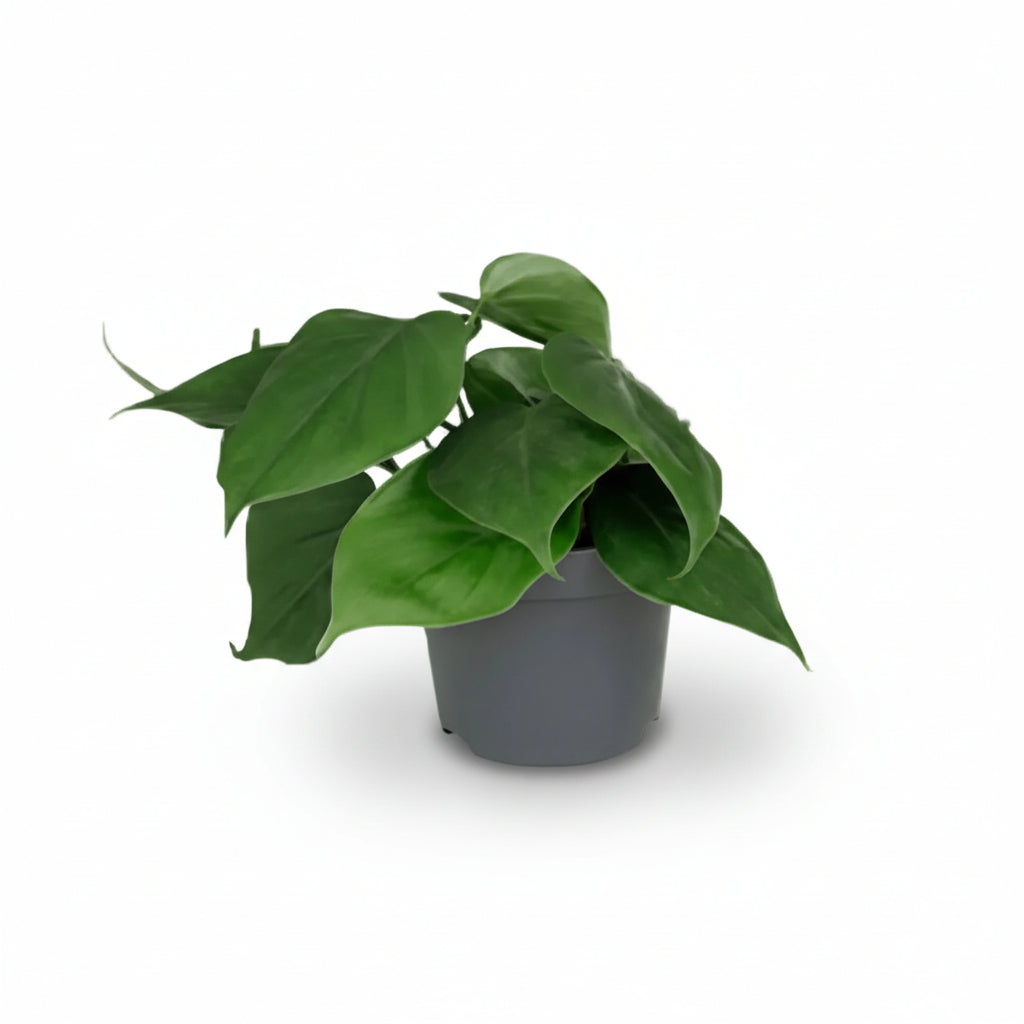
philodendron scandens - sweetheart plant

philodendron scandens - sweetheart plant Philodendron scandens — Climbing Heart Vine

Sale price$19.01 Regular price$21.12
Save 10%

Pay in installments of $5.28 with ShopPay, AfterPay and Klarna

Shipping Estimate
USA
  • USA
  • CAN

Ships within 48 hours · Estimated delivery Jul 31 - Aug 5

Promo Codes Available:

For Your Every Summer RSVP, with Code: SUMMER15

Description

philodendron scandens - sweetheart plant Philodendron scandens — Climbing Heart VineShiny tender green heart shaped foliage Trailing or climbing habit Tolerates low light Moderate watering Fast growth 3 sizes available The Philodendron scandens, also known as the heart vine, is a climbing or trailing plant native to the tropical forests of Central and South America, prized for its soft, shiny tender green heart shaped leaves. Its flexible stems and cordate leaves create a romantic and natural effect that suits any setting cascading

🌿 Shiny tender green heart-shaped foliage • 🌱 Trailing or climbing habit • 🌑 Tolerates low light • 💧 Moderate watering • 🚀 Fast growth • 🏙️ 3 sizes available

The Philodendron scandens, also known as the heart vine, is a climbing or trailing plant native to the tropical forests of Central and South America, prized for its soft, shiny tender green heart-shaped leaves. Its flexible stems and cordate leaves create a romantic and natural effect that suits any setting — cascading from a shelf, hanging like a curtain from a support, or forming a leafy cloud in a hanging planter.

Its exceptional tolerance to low light and rapid growth make it one of the most versatile trailing plants in the decorative trailing plants collection and the low-light plants selection.

Which Philodendron variety to choose?

The Philodendron genus includes dozens of species with very distinct shapes. Here’s how to place the Philodendron scandens among the references in the Philodendron collection — to choose between a Philodendron and a Monstera, as both genera often share the same locations and uses:

  • Philodendron scandens (this plant) — shiny tender green cordate leaves, very flexible trailing or climbing habit. The most versatile and easiest to care for in the range.
  • Philodendron Birkin — dark green foliage with fine white stripes, compact upright habit. The choice for precise graphic appeal and a more structured form.
  • Philodendron melanochrysum — large velvety dark green leaves with light veins, climbing habit. The choice for spectacular XXL foliage and rare velvety texture.
  • Philodendron White Princess — white and green variegated foliage, upright habit. The choice for striking variegation and very graphic leaves.
  • Philodendron Diamond Variegata — elegant green and cream marbling. The choice for softer, more natural variegation.
  • Philodendron Pedatum — spectacularly cut foliage, climbing habit, large size. The choice for a very architectural tropical effect in a large space.

Light & placement

Philodendron scandens is one of the few tropical plants that truly tolerates low light — a rare asset that makes it the ideal solution for dark rooms and corners without direct windows where most tropicals refuse to thrive.

  • Light: indirect to partial shade — tolerates shade, just avoid direct sunlight which burns the leaves.
  • Locations: bedroom, bathroom, office, dimly lit hallway — anywhere few plants survive.
  • Temperature: 15 to 27 °C, tolerates moderate fluctuations.

When hanging near a window, grow it trailing — on a moss pole in a less bright corner, grow it climbing to enjoy its fast growth and quickly cover a wall or shelf.

Watering & care

Philodendron scandens prefers a slightly moist but never soggy substrate — let the top 3 to 5 centimeters dry out between waterings, a rule valid for most indoor tropical plants.

  • Frequency: about once a week in spring-summer, every two weeks in winter.
  • Drainage: essential — use a pot with drainage holes and well-draining substrate.
  • Humidity: occasionally mist the foliage to replicate the tropical atmosphere.
  • Fertilizer: a liquid fertilizer for green plants diluted once a month in spring and summer.
  • Pruning: pinch stems regularly to encourage branching and a bushier habit.

Philodendron scandens roots very easily in water — cut a stem with a node, place it in a glass of water, and roots appear in 2 to 3 weeks, just as described for tropical plant cuttings.

Decor ideas & plant pairings

The flexibility and fast growth of Philodendron scandens make it an ideal structural plant for hanging arrangements — it quickly fills empty spaces and adds volume in the darkest corners.

  • For a very graphic trio hanging arrangement, pair Philodendron scandens with a Pothos and a Monstera adansonii — the heart-shaped leaves of scandens, the marbled leaves of Pothos, and the perforated leaves of Monstera create three very complementary textures in the same green palette.
  • On a moss pole in a dim corner, let Philodendron scandens climb a moss pole — its tolerance to partial shade makes it one of the few plants to quickly cover a wall or shelf in less sunny spaces.
  • For a contrast foliage pairing, place it alongside a Calathea Lancifolia — the smooth, shiny cordate leaves of Philodendron contrast with the elongated, spotted leaves of Calathea for a very dynamic tropical composition.
  • In a macramé or natural fiber decorative pot, the trailing stems of Philodendron scandens create a natural cascading effect that is very elegant — choose a hanging decorative pot in white ceramic or terracotta to highlight the softness of the tender green foliage.

Verdeia Tips

  • Pinch stems regularly for a bushier habit: left unpruned, Philodendron scandens produces long, sparsely branched stems — pinching the tips encourages new lateral shoots and a dense, generous silhouette that is much more decorative.
  • Choose your growing style from the start: trailing in a hanging planter for an elegant cascading effect, or climbing on a moss pole for larger leaves and more pronounced fenestrations — both styles give very different results and the decision is made from the beginning.
  • Propagate regularly to thicken the plant: cut the longest stems, replant them directly in the mother plant’s pot — within a few weeks, new shoots emerge and the plant becomes much fuller and more voluminous.

Technical specifications

  • Botanical name: Philodendron scandens
  • Common name: Heart vine
  • Family: Araceae
  • Origin: Tropical forests of Central and South America
  • Dimensions at delivery: 🏙️ 3 sizes available — H15 cm | Pot Ø12 cm, H20 cm | Pot Ø12 cm, H120 cm | Pot Ø24 cm
  • Habit: Trailing or climbing depending on support
  • Light: Indirect to partial shade, tolerates low light
  • Watering: Moderate, let 3-5 cm dry on surface between waterings
  • Temperature: 15 – 27 °C
  • Care: Very easy
  • Toxicity: Toxic to pets and children (calcium oxalate crystals)
  • Decor style: Tropical / Trailing / Versatile

Each plant is unique: photos show an example of its appearance. Leaf density and stem length naturally vary depending on light, humidity, and season.

Shipping Notes
  • Free Standard Shipping on $100+ Orders to the USA.
  • Except Preorder products are shipped in 48 hours.
  • Delivery to the USA:
  1. Standard Shipping : 3-10 business days
  • If time is of the essence, please consider selecting expedited delivery for faster service.
Exchange/Return Notes
  • We offer a 30-day return/exchange service after receiving.
  • Final sale items are not eligible for returns or exchanges.
  • To process your return/exchange, please contact us at [email protected]
  • Please click here for more details>>> Return & Exchange Policy
SKU: 65099952372

Discover Niche Categories That Outsell philodendron scandens - sweetheart plant

Top-Converting Item to Boost Your Average Order

4.4 ★★★★★
Based on 11 reviews
Sort
Highest Rating
Newest First
Oldest First
Product Reviews
M
Verified Purchase
Mama N
San Leandro, US
★★★★★ 5
The most important book a parent will ever read
Format: Hardcover
I have so much I want to say about this book and how it changed my perspective to parenting for the better. There are so many books about what to expect when you first find out you’re pregnant and how to go about the next newborn/infant stage. There’s not enough talk about needing to read parenting books beyond the first 12 months. To be honest, I found this book the most motivating, inspiring and HELPFUL Of them all. This book is definitely geared towards the toddler and beyond years, and I really wish I had read this earlier. Please do yourself a favor and read this book prior to toddler years. Even if you think you know how to go about helping foster your on childs independent, appropriate, and emotional development, as well as sibling/ friendship hardship in the correct manner, I challenged you to read this book to make sure what you’re doing (or plan to do) is truly right. This book helped me develop the tools (actions and word choices) that I needed to improve my reactions towards undesirable words or actions by my toddler. This in turn has reduced her outbursts (Both physical and verbal) and has given her anymore independent and an emotionally stable/strong relationship with herself and everyone else. This is especially for those strong willed and emotionally intelligent/ sensitive children. To be honest, I even learned a lot about how to navigate adult relationships better. I learned a little bit (maybe more than I want to admit) about myself too. 10/10.
WAS THIS REVIEW HELPFUL?YesReportShare
Reviewed in the United States on June 11, 2025
L
Verified Purchase
Louis Liu
Phoenix, US
★★★★★ 5
After all, chidren are good inside.
Format: Kindle
Parenting is about how parents treat their kids. One important aspect of what counts for good parenting is how we face the kids’ negative behaviors. When we were children, our parents did not respect our emotional needs. They only scolded us when we were naughty. After we become parents, we treat our kids the way our parents treated us. Dr Becky proposes in this book, contrary to what our parents thought, children are all good inside and thus we should treat children’s bad behaviors as if their misbehaviors are signs that they don’t know how to express their needs. With this assumption, there are three implications for parenting. First, as children are good inside, what they do outside should not be our focus. Whether it is emotional tantrums, not listening, aggressive tantrums, sibling rivalry, rudeness and defiance, whining, lying, food habits, parents should not pay too much attention to it. Instead, parents should see the cause that contributes to the resulting negative behavior. Take whining as an example. Whining, according to a Cambridge dictionary, means ‘to make a long, high, sad sound’. As parents we are easily annoyed by whining and we quickly think that kids are disrespectful. In Dr Becky’s view, whining=strong desire+powerlessness. Children whine because they feel helpless and ‘indicate they feel alone and unseen in their desires’ (p.188), rather than because they are arrogant. What does this imply? Do we have to give in, knowing that they are desperate for connection and feeling powerful? The answer is no. Dr Becky said ‘while our job as parents is to make decisions that we feel are right for our kids even in the face of protest, we can still practice understanding and connecting’. While saying no, which they probably know they do need, at the same time we can give them the sympathy they also need. Thinking that kids are bad inside often leads to power struggles or arguments when we request them to request in an appropriate tone again. Kids are good inside, and thus we should focus our attention on how to respond to their helplessness rather than their whines. Secondly, not only should we not focus on their outside behavior, we should also be aware that what is on the surface often contrasts with what the kid feels inside. One of the most-feared emotions we are afraid to see children have is anger, also known as tantrums. When children are angry, they display undesirably violent behaviors such as hitting others. Dr Becky points out that they hit not because they are angry, but because they are scared. When we adults are afraid, we may also kill people if we are irrational. Children have not yet developed their prefrontal cortex which is responsible for logic and language, and so the most severe reaction they can possibly express is through tantrums. We may wonder why children are afraid: they are “terrified of the sensations, urges, and feelings coursing inside their body” (p.158) such as frustration and anxiety. These feelings which adults are used to feel scary to kids. Naming the right emotion is the first step to solving the problem and helping kids to cope with it. Only after we identify correctly the emotion the children are experiencing can we as parents exert the right method to deal with the out-of-control behavior. Clearly we know reprimanding our kids is not correct because “they are good inside”. To stop the kid's aggressive tantrums effectively, parents should assert their authority. Parents should show the confidence that they are in charge of the situation. Then, the next critical step is to maintain the kid's safety. Regardless of how the kid feels, the parent should stop the dangerous behavior the kid is engaging in, which Dr Becky calls containment. She says it best: “kids don’t feel good when they are out of control”. That we assert our authority and contain even though kids are not happy on the surface is an act of love, maturity, and responsibility. If we don't, not only will it cause injury, it will make children think we evade responsibility, thus making them feel more overwhelmed. To conclude, as parents we need to know our roles and our kids’ roles. Our job is to keep our children safe, both physically and psychologically. We need to remember that a gap exists between kids’ abilities to feel and their abilities to regulate their feelings, and the gap manifests as deregulated behavior. While it is children’s job to explore and express their feelings, it is our job to help them regulate them by setting physical boundaries, validating their emotions, and being empathetic to their feelings. We are our kids’ role models. We are demonstrating to our kids the emotion regulation skills. As our kids are allowed to shout and protest because they are doing their jobs, we are also allowed to upset them when we set boundaries. We just need to remember that to do our job well, we must learn to connect with and understand them more because after all, children are good inside.
WAS THIS REVIEW HELPFUL?YesReportShare
Reviewed in the United States on February 4, 2025
R
Verified Purchase
RICHARD MERCER
Chelsea, US
★★★★★ 4
Good read
Very good basic subjective author. Some modern therapist offer a different perspective on rewards and child behavior, but to be expected in academia. As with any behavioral psychology observable or behavioral science documents - measure the subjective amount against the scientific controlling evidence being offerred. If no evidence - it is just subjective opinion.
WAS THIS REVIEW HELPFUL?YesReportShare
Reviewed in the United States on March 7, 2026
C
Verified Purchase
Courtney
Charlottesville, US
★★★★★ 5
Not JUST a Parenting Book
Format: Hardcover
Good Inside and Dr. Becky are everything the world needs now. A strong, sturdy perspective that truly, wholeheartedly believes in the good inside us all. That is truly not cheap talk. It. is. the. real. deal. This book is a parenting book that covers big picture philosophical understandings of parenthood AND the more practical, day-to-day implementation of said philosophies. Dr. Becky is incredible about explaining the underlying reasons for why kids do what they do and why WE respond as we do and then she talks us through exactly how to apply the "most generous interpretation" so that we can do better for the next generation AND for ourselves. Good Inside is also a REparenting book and a leadership book. She will teach you how to show up for the realness of your own life for yourself and for the kids that you love most dearly. Truly, there is not a better way to spend your money. Maybe go ahead and stock up on highlighters and your favorite pens too because, if you're like me, you will be highlighting and underlining left and right. It's truly that game-changing. Get ready to finally understand your job description as a parent and your kids' job descriptions as wonderful, little growing humans in the world. And if you yourself need healing from your own childhood, this will open the door for that too. I know that you, dear Amazon review reader, do not know me but I am not really prone to hyperbole. I do not feel it is an exaggeration to say that Dr. Becky and Good Inside is game-changing. This purchase is truly an investment in yourself and the kind of parent and person you want to be and an investment in your kids and their future.
WAS THIS REVIEW HELPFUL?YesReportShare
Reviewed in the United States on September 14, 2022
A
Verified Purchase
Amazon Customer
Lake Worth, US
★★★★★ 5
Good advice overall
Format: Paperback
This is an interesting read to help with your child’s self esteem and behavior. The first several chapters on the psychology behind behavior were more helpful and interesting than the second half of the book that addresses specific behaviors. Also, if you follow Dr Becky on social media, most of her advice is already in her content. However, I’m glad I read this book, even it wasn’t life changing.
WAS THIS REVIEW HELPFUL?YesReportShare
Reviewed in the United States on March 20, 2026

recommand products