Pay in installments of $7.10 with
 ,
,
 and
and

Shipping Estimate
USA
- USA
- CAN
- USA
- CAN
Ships within 48 hours · Estimated delivery Aug 10 - Aug 15
 Promo Codes Available:
For Your Every Summer RSVP, with Code: SUMMER15
Description
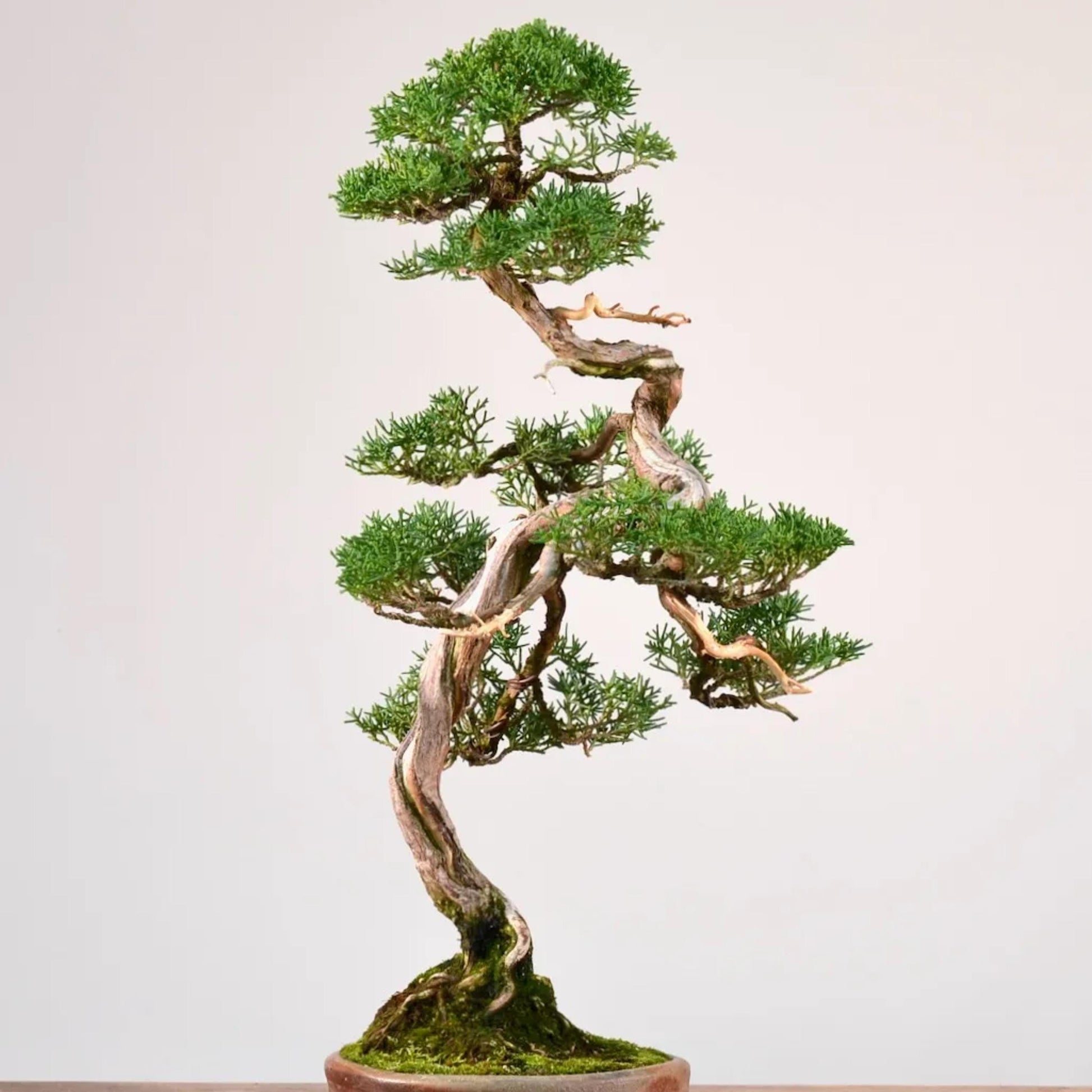
juniper bonsai tree seeds Oneseed Juniper Seeds (Juniperus monosperma)The desert survivor. The tree that holds the Southwest together. Juniperus monosperma, the Oneseed Juniper, is one of the most important native trees of the American Southwest and Great Basin, the dominant woodland species across millions of acres of the Colorado Plateau, New Mexico, Arizona, and southern Utah where it forms the pinyon juniper woodland that is the most widespread forest type in the American West. It grows where almost nothing else of
The desert survivor. The tree that holds the Southwest together.
Juniperus monosperma, the Oneseed Juniper, is one of the most important native trees of the American Southwest and Great Basin, the dominant woodland species across millions of acres of the Colorado Plateau, New Mexico, Arizona, and southern Utah where it forms the pinyon-juniper woodland that is the most widespread forest type in the American West. It grows where almost nothing else of its size survives, on thin rocky soils at elevations between 3,500 and 7,000 feet where summer temperatures are extreme, winter temperatures are brutal, and annual rainfall averages less than 15 inches. Despite these conditions it lives for centuries and supports an extraordinary diversity of wildlife. If you are looking to buy Oneseed Juniper seeds or grow this desert native from seed, this is the tree that defines the high desert landscape of the American Southwest.
- The dominant woodland tree across millions of acres of the Colorado Plateau and Great Basin
- Extraordinary drought and cold tolerance, thriving in conditions that defeat most other trees
- Produces single-seeded blue berries eaten by bluebirds, robins, mule deer, and dozens of other species
- Deep, extensive root system that controls erosion and stabilizes the thin desert soils it grows on
- Aromatic wood and foliage sacred to numerous Southwestern Indigenous cultures for centuries
Things you probably did not know about the Oneseed Juniper
It is one of the most important ceremonial trees in Southwestern Indigenous culture. Oneseed Juniper holds profound ceremonial and practical significance for Navajo, Hopi, Zuni, and numerous other Pueblo and Plains peoples of the Southwest. The wood is used for heating, cooking, and building. The bark is woven into cradle boards, rope, and matting. The berries are eaten and used medicinally. The smoke of burning juniper branches is used in purification ceremonies. Few trees are as thoroughly woven into daily and ceremonial life across any cultural region in North America.
The wood burns hotter and longer than most desert fuels. Oneseed Juniper wood is dense, resinous, and produces extraordinary heat when burned. In the high desert where fuel sources are limited, juniper firewood has been the primary heating and cooking fuel for human communities from ancient Ancestral Puebloan settlements through modern Navajo households. The wood's BTU output is comparable to many hardwoods despite growing in conditions that rarely support hardwood trees.
The berries take two years to ripen. Like most junipers, Oneseed Juniper berries develop over two growing seasons before reaching full ripeness. In any given year a tree carries both the current year's immature berries and the previous year's ripening berries simultaneously. The ripe berries have a waxy, blue-coated surface and a sweet, resinous flavor that is technically edible and was consumed by Southwestern peoples both fresh and ground into a meal mixed with other foods.
The roots fix an enormous volume of soil against erosion. The deep, spreading root system of Oneseed Juniper in desert soils extends far beyond the tree's canopy and binds the thin, rocky desert soils against wind and water erosion. Studies of juniper woodland removal for grazing expansion have documented accelerated erosion and long-term soil loss in cleared areas, demonstrating that the trees are providing active soil stabilization services that are difficult to restore once the trees are gone.
Growing Details
- Botanical Name: Juniperus monosperma
- Stratification: Required, 90 to 120 days cold stratification
- USDA Zones: 4 to 8
- Soil: Well-drained, rocky, sandy, or poor alkaline soils, requires excellent drainage, does not tolerate wet conditions
- Light: Full sun
- Height: 10 to 25 feet
- Spread: 6 to 15 feet
- Growth Rate: Slow, 6 to 12 inches per year
Plant it in full sun on the driest, rockiest site available and give it nothing but time. This tree built the desert. It will build itself.
Shipping Notes
- Free Standard Shipping on $100+ Orders to the USA.
- Except Preorder products are shipped in 48 hours.
- Delivery to the USA:
- Standard Shipping : 3-10 business days
- If time is of the essence, please consider selecting expedited delivery for faster service.
Exchange/Return Notes
- We offer a 30-day return/exchange service after receiving.
- Final sale items are not eligible for returns or exchanges.
- To process your return/exchange, please contact us at [email protected]
- Please click here for more details>>> Return & Exchange Policy