Pay in installments of $5.96 with
 ,
,
 and
and

Shipping Estimate
USA
- USA
- CAN
- USA
- CAN
Ships within 48 hours · Estimated delivery Aug 13 - Aug 18
 Promo Codes Available:
For Your Every Summer RSVP, with Code: SUMMER15
Description
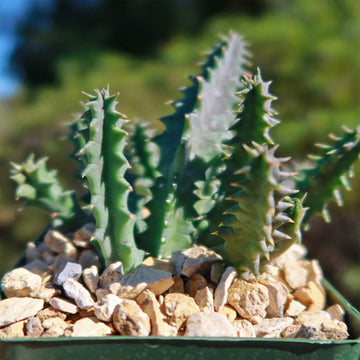
lifesaver cactus succulent Shop 'Lifesaver CactusIntroducing the lifesaver cactus, also known as Huernia zebrina. Although it is referred to as the lifesaver cactus, the vibrant, circular flowers have a central opening that looks like the hole in a lifesaver candy, hence the name. This lifesaver cactus has many other names, such as owl eyes plant, lifebuoy Huernia, carrion flower, and zebra striped Huernia. Native to South Africa, Huernia zebrina has thick, fleshy stems that grow in a creeping
Introducing the lifesaver cactus, also known as Huernia zebrina. Although it is referred to as the lifesaver cactus, the vibrant, circular flowers have a central opening that looks like the hole in a lifesaver candy, hence the name. This lifesaver cactus has many other names, such as owl eyes plant, lifebuoy Huernia, carrion flower, and zebra-striped Huernia.
Native to South Africa, Huernia zebrina has thick, fleshy stems that grow in a creeping manner.
Your stunning lifesaver can grow up to 8 inches tall and 6 inches wide.
These stems are covered in unique, dark green, triangular-shaped markings that resemble the pattern of a zebra. Hence, the plant gets its common name, "zebrina."
The red star-shaped flowers of the lifesaver cactus are truly captivating during the spring and summer.
The center of these star-shaped flowers is adorned with raised, dark red or maroon markings that resemble the shape of a lifesaver candy, hence the nickname. The intricate design adds to the allure of the plant, making it a stunning addition to any succulent collection or garden. The lifesaver cactus flowers are not only visually striking but also emit an unpleasant aroma that attracts pollinators, such as flies. The odor is frequently compared to carrion, the decaying flesh of dead animals, which is why the flower is also known as a carrion flower.
Additionally, Huernia zebrina has no reported toxic effects, making it safe to use around pets and humans.
When and How to Water Your Lifesaver Cactus
Like other succulents, the Huernia zebrina lifesaver plant has specific watering requirements that are different from those of regular houseplants. Succulents, including the lifesaver plant, are adapted to survive in arid conditions and store water in their leaves, stems, or roots.
It's important to follow a "soak and dry" method. This means that you should thoroughly water the plant until the water drains out from the bottom of the pot, and then allow the soil to dry out completely before watering again. It's important not to keep the soil wet all the time because this can cause root rot and other problems.
In the spring and summer, during the growing season, it's recommended to water the lifesaver cactus every 2-3 weeks. In winter, when your Huernia zebrina is in a dormant state, you can reduce the frequency and water it sparingly.
Remember, it's always better to underwater than to overwater the lifesaver plant. If in doubt, it's best to err on the side of caution and let the soil dry out before watering again. Observing your lifesaver and checking the moisture level of the soil using your finger can also help you determine when it's time to water.
Light Requirements - Where to Place Your Lifesaver Cactus
When growing your Huernia zebrina indoors, it's important to mimic its natural lighting conditions as closely as possible. Place your lifesaver plant in a location where it can receive bright, indirect sunlight for several hours a day. A south-facing window is often an excellent choice, as it provides ample light without exposing the plant to direct sunlight, which can cause sunburn.
If you don't have a south-facing window, don't worry! The lifesaver cactus can adapt to slightly lower light conditions but may grow more slowly. You can supplement its light requirements by using artificial grow lights, which can provide the necessary intensity and spectrum of light for your succulent growth.
For outdoor cultivation, this unique lifesaver succulent prefers bright, full sunlight to partial shade for optimal growth and health. In its natural habitat, the lifesaver plant thrives in semi-arid regions where it receives plenty of sunlight.
It's important to note that while the lifesaver plant enjoys bright light, it's best to avoid placing it in direct sunlight for more than 6-8 hours, especially during the hottest parts of the day. Direct sunlight can scorch the leaves and cause damage to your Huernia zebrina. If you notice that the leaves are turning yellow or brown, it may be a sign that the succulent is receiving too much direct sunlight.
Optimal Soil & Fertilizer Needs
When it comes to the optimal soil for your Huernia zebrina, this unique succulent thrives in well-draining soil that mimics its natural habitat. For the lifesaver plant, it's best to use a well-draining cactus or succulent potting mix. These types of soil blends are specifically formulated to provide the right balance of moisture retention and drainage. To improve drainage, you can make your own mix by combining regular potting soil with perlite or coarse sand. Instead, make or buy a well-draining potting mix, or ideally, use our specialized potting mix that contains 5 natural substrates and mycorrhizae to promote the development of a strong root system that helps your lifesaver cactus thrive.
When it comes to fertilizing, the lifesaver plant doesn't require heavy feeding. In fact, it's generally recommended to use a diluted, balanced fertilizer specifically formulated for cacti and succulents. During the growing season, which is typically spring, you can fertilize your lifesaver plant once a year with an equal amount of NPK (5-10-5).
Remember, it's important not to over-fertilize the lifesaver plant, as this can lead to nutrient burn and other issues. Always err on the side of caution and use a weaker concentration than what is recommended, as succulents are adapted to survive in nutrient-poor environments.
Hardiness Zone & More
When growing indoors, it thrives in warm temperatures ranging from 60 to 80 degrees Fahrenheit. It's important to avoid exposing the plant to extreme temperature fluctuations, as this can cause stress and damage to the lifesaver plant.
For outdoor cultivation, the lifesaver plant can thrive in USDA zones 9 to 11, which are regions with milder climates. These zones generally have average minimum temperatures ranging from 20 to 40 °F. If you live in a colder climate, it's best to keep the lifesaver plant indoors or provide it with protection during the colder months.
In terms of humidity, the lifesaver plant is adaptable and can tolerate a range of humidity levels. However, it generally prefers lower-humidity environments similar to its native habitat. Aim for a humidity level of around 40 to 50%, which is considered average indoor humidity. If the air in your home is particularly dry, you can increase humidity by using a humidifier or placing a tray filled with water near the plant.
Remember, providing the lifesaver plant with the right temperature and humidity conditions and appropriate hardiness zone considerations will help ensure its health and vitality.
Wildlife - Lifesaver Cactus Attracts the Following Friendly Pollinators
The Lifesaver Cactus attracts pollinators through its unique star-shaped flowers, which emit a faint carrion-like scent. This odor mimics the smell of decaying organic matter, drawing in flies, which are the primary pollinators for the plant. The distinctive yellow and red coloration of the flowers, along with their rubbery central ring, further entices these insects, encouraging them to land and facilitate pollination.
Toxicity: The Lifesaver Cactus is considered non-toxic to humans and pets, making it a safe choice for households with animals or young children. It is not harmful if touched or ingested in small amounts.
Propagating Lifesaver Plant
Propagating this unique lifesaver plant Huernia zebrina can be done through various methods, including stem cuttings and seed propagation. For stem cuttings, you can take a healthy stem from the plant and allow it to dry out for a few days to form a callus. Then, you can plant the stem in well-drained soil and provide it with indirect sunlight and minimal watering. Over time, new roots will develop, and a new plant will begin to grow. Seed propagation is another option, where you can collect the seeds from mature flowers and sow them in a well-draining soil mix. With patience and proper care, you can successfully propagate the lifesaver plant and expand your collection of these fascinating succulents.
Key Takeaways
- The Lifesaver Cactus thrives in arid conditions and requires minimal watering, making it a perfect choice for water-wise gardening and low-maintenance plant collections.
- Its star-shaped, yellow, and red flowers feature a raised, rubbery central ring that resembles a candy "lifesaver," giving the plant its unique common name.
- With a small, clumping growth habit, this succulent fits well in limited spaces like windowsills, terrariums, or small containers, adding a touch of desert charm to any spot.
- The Lifesaver Cactus is easily propagated through stem cuttings, allowing for effortless expansion of your collection or sharing with fellow plant enthusiasts.
- Despite its unusual appearance, the flowers emit a faint carrion-like scent that attracts pollinators like flies, contributing to the plant’s reproduction and the ecosystem.
The Bottom Line
Overall, the lifesaver plant Huernia zebrina is a captivating succulent that never fails to grab attention with its unique star-shaped flowers. These blooms, with their striking dark green or brownish stripes resembling a zebra pattern, add a touch of whimsy to any garden or indoor space. Taking care of the lifesaver plant is relatively easy, as it thrives in bright, indirect sunlight and well-draining soil. Whether you choose to propagate it through stem cuttings or seeds, with a little patience and proper care, you can expand your collection of these fascinating succulents.
Shipping Notes
- Free Standard Shipping on $100+ Orders to the USA.
- Except Preorder products are shipped in 48 hours.
- Delivery to the USA:
- Standard Shipping : 3-10 business days
- If time is of the essence, please consider selecting expedited delivery for faster service.
Exchange/Return Notes
- We offer a 30-day return/exchange service after receiving.
- Final sale items are not eligible for returns or exchanges.
- To process your return/exchange, please contact us at [email protected]
- Please click here for more details>>> Return & Exchange Policy