Pay in installments of $6.47 with
 ,
,
 and
and

Shipping Estimate
USA
- USA
- CAN
- USA
- CAN
Ships within 48 hours · Estimated delivery Aug 4 - Aug 9
 Promo Codes Available:
For Your Every Summer RSVP, with Code: SUMMER15
Description
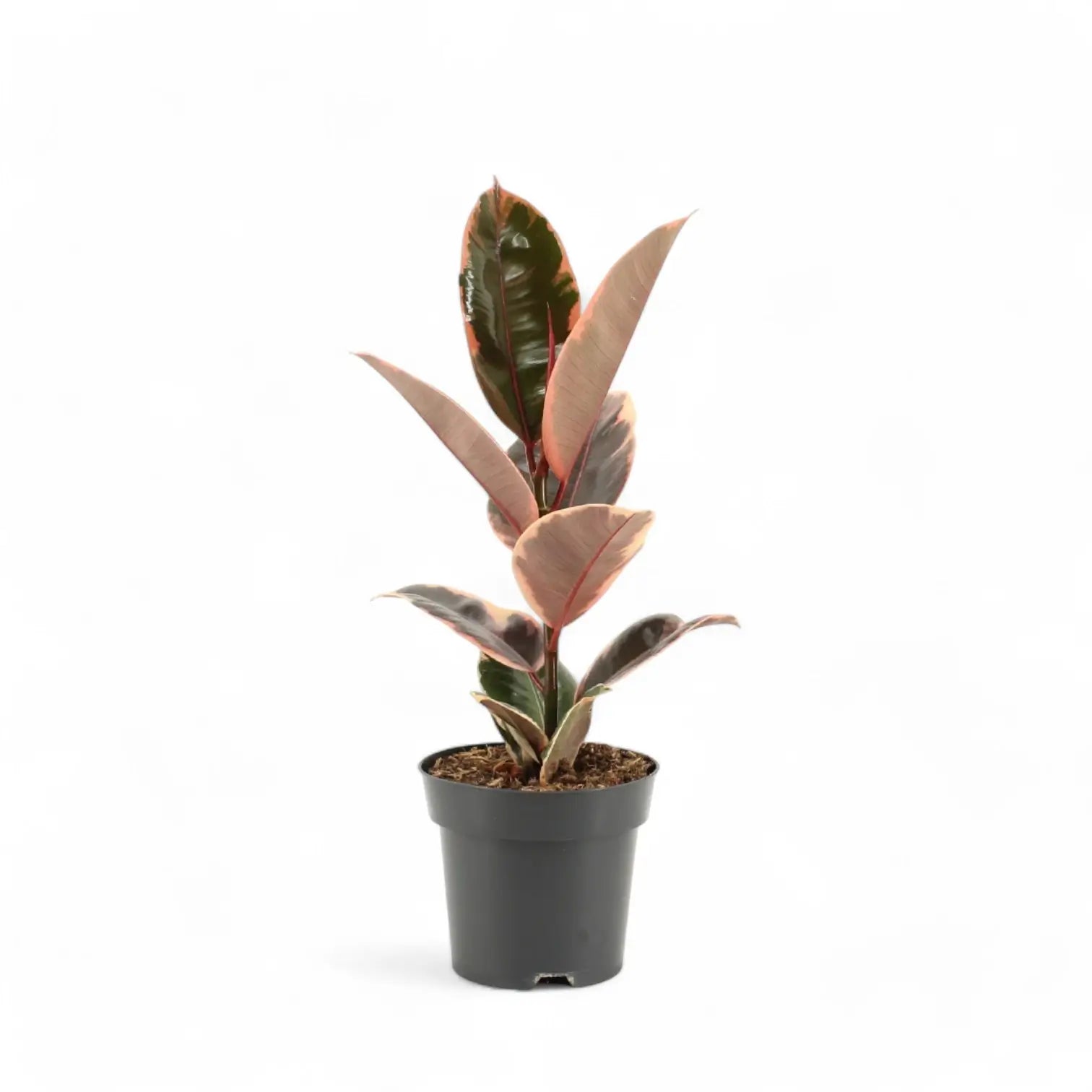
rubber tree belize vs ruby Ficus elastica 'Belize'Ficus elastica Belize Ficus elastica Belize is a variegated rubber plant with glossy oval leaves marked in green, cream and pink, often with reddish pink midribs and warm colour on fresh growth. The colour is strongest when new leaves expand, then settles into a layered pattern as the leaf surface hardens. This cultivar has the upright woody stems and thick evergreen leaves of Ficus elastica, with a brighter leaf palette than the plain green forms.
Ficus elastica ‘Belize’
Ficus elastica ‘Belize’ is a variegated rubber plant with glossy oval leaves marked in green, cream and pink, often with reddish-pink midribs and warm colour on fresh growth. The colour is strongest when new leaves expand, then settles into a layered pattern as the leaf surface hardens.
This cultivar has the upright woody stems and thick evergreen leaves of Ficus elastica, with a brighter leaf palette than the plain green forms. Each new leaf emerges from a protective sheath before opening into a broad, leathery blade with irregular pale margins and red-flushed details.
Pink-variegated rubber plant foliage
- Leaf pattern: Broad glossy leaves carry irregular green, cream and pink variegation.
- Midrib colour: Reddish-pink midribs add extra colour through the centre of each leaf.
- New growth: Fresh leaves often show stronger pink tones before the mature pattern settles.
- Stem habit: Upright woody stems create a small indoor tree shape over time.
- Pale tissue: The pale leaf sections can scorch or brown when sun, heat or watering changes too sharply.
Growth and background of Ficus elastica ‘Belize’
The species Ficus elastica is a tropical fig tree from wet tropical regions of Asia. In a pot, Ficus elastica ‘Belize’ keeps the species’ thick leaves, upright shoots and latex-bearing stems, while the pale and pink sections need filtered light, warmth and an evenly draining mix.
As the plant matures, the stem gradually becomes firmer and the leaf canopy becomes heavier at the top. Pruning above a node can encourage branching, while an unpruned plant usually keeps a cleaner single-stem or few-stem outline.
Light and watering for colourful Ficus elastica leaves
- Light: Place in bright filtered light. Pale and pink leaf sections are more prone to scorching in harsh direct sun.
- Watering: Let the upper potting mix dry before watering again, then water thoroughly and drain the pot fully.
- Substrate: Use a free-draining mix with bark, perlite, pumice or similar mineral material to protect the roots from stale moisture.
- Warmth: Keep temperatures steady, ideally above 18 °C, and avoid cold windowsills during winter nights.
- Humidity: Moderate humidity helps curled new leaves open smoothly, especially in dry heated rooms.
- Feeding: Feed lightly during spring and summer. Avoid heavy fertiliser on a stressed or recently repotted plant.
- Cleaning: Wipe leaves gently with a damp soft cloth so dust does not dull the glossy variegation.
- Pruning: Trim above a node to manage height, allowing for latex sap from the cut stem.
Common issues on Ficus elastica ‘Belize’
- Brown edges: Check for direct sun, dry heat or irregular watering, especially on pale leaf margins.
- Sudden shedding: Review temperature changes, draughts and root moisture after moving or shipping.
- Yellow lower leaves: Lift the inner pot and inspect drainage if the substrate stays wet for several days.
- Slow, soft growth: Check whether the plant is sitting too far from a window and adjust placement gradually.
- Sticky patches: Look for scale insects along stems and midribs before assuming the mark is only spilled sap.
Safety around Ficus elastica ‘Belize’
Ficus elastica ‘Belize’ contains milky latex in its leaves and stems. The sap can irritate skin and eyes, and ingestion may irritate the mouth or digestive tract of pets. Keep the plant out of reach of chewing pets and children, and use gloves when cutting stems or removing damaged leaves.
Name and botanical placement
Ficus elastica belongs to Moraceae, the fig family. Ficus comes from the Latin word used for fig, and elastica refers to the elastic latex associated with the species.
New flushes bring pink over cream-and-green leaves before the blades harden into a glossy rubber plant canopy.
Shipping Notes
- Free Standard Shipping on $100+ Orders to the USA.
- Except Preorder products are shipped in 48 hours.
- Delivery to the USA:
- Standard Shipping : 3-10 business days
- If time is of the essence, please consider selecting expedited delivery for faster service.
Exchange/Return Notes
- We offer a 30-day return/exchange service after receiving.
- Final sale items are not eligible for returns or exchanges.
- To process your return/exchange, please contact us at [email protected]
- Please click here for more details>>> Return & Exchange Policy