Pay in installments of $5.00 with
 ,
,
 and
and

Shipping Estimate
USA
- USA
- CAN
- USA
- CAN
Ships within 48 hours · Estimated delivery Aug 13 - Aug 18
 Promo Codes Available:
For Your Every Summer RSVP, with Code: SUMMER15
Description
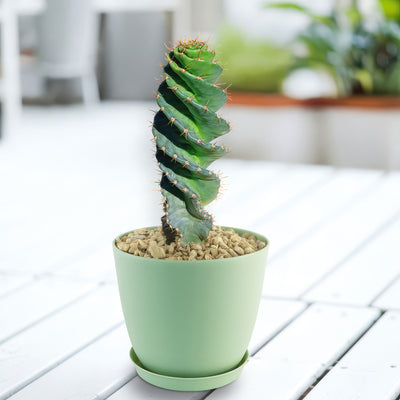
indoor spiral plant Spiral CactusThe Spiral Cactus, known as Cereus forbesii 'spiralis', is prized for its tall, columnar stems that naturally twist into a mesmerizing spiral pattern. Each stem grows upright, with a ribbed surface and striking blue green color, adding both texture and elegance. This fast growing spiral cactus can grow up to 16 feet tall and about 5 inches wide, creating an impressive vertical presence. The funnel shaped flowers of spiral cacti bloom in late spring
The Spiral Cactus, known as Cereus forbesii 'spiralis', is prized for its tall, columnar stems that naturally twist into a mesmerizing spiral pattern. Each stem grows upright, with a ribbed surface and striking blue-green color, adding both texture and elegance.
This fast-growing spiral cactus can grow up to 16 feet tall and about 5 inches wide, creating an impressive vertical presence.
The funnel-shaped flowers of spiral cacti bloom in late spring and early summer. These stunning waxy blooms open up only at night but linger no longer than 24 hours, giving them the nickname “Night-blooming cereus”.You'll be amazed by their dazzling pinkish-white to red-colored petals that will make your heart skip a beat or two.
These majestic night-blooming cereus originated all the way from Brazil back in the day. Around 1980, some brave souls took cuttings from the original cereus cactus and brought them over to Europe. Since then, these extraordinary night-blooming cacti have mesmerized people worldwide through seed breeding, cloning, and large purple fruits. For this reason, these are considered to be expensive cacti.
When and How to Water Your Spiral Cactus
The Spiral Cactus is highly drought-tolerant, perfectly adapted to arid climates where rainfall is scarce. Its thick, ribbed stems store moisture efficiently, allowing the plant to endure long dry spells without harm. The spiral cactus prefers watering once every 2-3 weeks in spring and summer, and once every 4-6 weeks in fall and winter.
In spring and summer, during its active growing season, water your Spiral Cactus deeply but infrequently about once every 2–3 weeks. Always ensure that the soil is completely dry before watering again; the top 1–2 inches of soil should feel dry to the touch. Overwatering can easily lead to root rot, as the plant’s roots are sensitive to excess moisture. In hotter months, if you notice the cactus starting to wrinkle or lose firmness, that’s a sign it’s time for a good soak.
In the fall and winter months, the Spiral Cactus enters dormancy, slowing its growth and water usage. During this period, water very sparingly once every 4–6 weeks or even less, depending on your climate. It’s often best to skip watering entirely unless the cactus shows visible signs of dehydration, such as slight shriveling.
Light Requirements - Where to Place Your Spiral Cactus
When growing indoors, the Spiral Cactus thrives in bright, direct sunlight ideally near a south- or west-facing window where it can receive at least 5–6 hours of direct light daily.
If your home doesn’t receive enough natural sunlight, especially in rooms with north-facing windows. These lights mimic natural sunlight and help maintain healthy growth and vibrant color.
Rotate the pot occasionally so all sides of the cactus receive even exposure and develop its characteristic spiral symmetry.
When grown outdoors, the Spiral Cactus performs best in full sun, where it receives a minimum of 6 hours of direct light per day. However, in extremely hot or desert-like climates, it benefits from light afternoon shade to prevent sun scorch on young or newly planted specimens. Choose a location with good air circulation and well-draining soil to reduce the risk of rot and fungal problems.
Optimal Soil & Fertilizer Needs
The spiral cactus favors very airy, sandy soil that drains well, and should be fertilized (NPK) once a year in spring. Planting them in ordinary soil will result in compacted roots, stunted growth, and, most likely, root rot. Instead, make or buy a well-draining potting mix, or ideally, use our Go to soil cactus mix blend 1 gal 4 qt cacti succulent dirt compost growing media that contains over 5 natural substrates and mycorrhizae to promote the development of a strong root system that helps your night-blooming cereus cactus to thrive.
Natural fertilizers with a maximum ratio of 5-10-5 that is higher in phosphorus than nitrogen also last longer and keep your soil alive by adding other beneficial compounds and microbes that encourage cereus plant health and nutrient absorption. So, skip those harsh chemicals and give your blooming cereus some love with some awesome organic fertilizer!
Hardiness Zones & More
In the United States, the spiral cactus is mostly an indoor plant, but if you live in southern Florida or Hawaii, then you can cultivate it outdoors in USDA zones 10-11
In these regions, it can be grown outdoors year-round, enjoying temperatures between 65°F and 90°F. While it can briefly tolerate temperatures down to 40°F, exposure to frost or freezing conditions can cause permanent damage to the stems.
If you live in cooler regions, it’s best to grow the Spiral Cactus in containers so it can be moved indoors during the colder months. Ensure that the cactus is kept in a dry, sheltered spot when nighttime temperatures drop below 50°F.
How to Grow Best Spiral Cacti Indoors
The Cereus forbesii 'spiralis' thrives indoors in temperatures between 65 and 85°F and humidity levels around 40-50%. To ensure optimal growth, place the cactus in a location with bright, indirect sunlight and water sparingly, allowing the soil to dry out completely between waterings.
Wildlife – Spiral Cactus Attracts the Following Friendly Pollinators
The spiral cactus is known to attract a variety of pollinators such as bees, butterflies, and hummingbirds due to its bright flowers and sweet nectar. These pollinators play a crucial role in the ecosystem by aiding in the reproduction of plants and ensuring biodiversity.
According to ASPCA, the Cereus forbesii is not toxic to humans and animals. Because spines are sharp, it is best to keep them out of the reach of pets and young children. But don't be intimidated by its bold appearance - this night-blooming cactus is easy to care for and can thrive in a variety of environments.
How to Propagate Your Spiral Cactus
To propagate your spiral cactus, you can use stem cuttings. Simply cut a healthy stem from the cactus and allow it to callous over for a few days before planting it in well-draining soil. Water sparingly until roots develop, and then gradually increase watering as the plant establishes itself.
The Bottom Line
Overall, the Spiral Cactus (Cereus forbesii ‘Spiralis’) is a truly captivating plant that combines sculptural beauty with remarkable resilience. Its twisting, spiral-shaped stems make it a striking focal point in any garden or indoor collection, while its low-water needs and heat tolerance make it perfect for drought-prone regions. Whether grown in a pot or directly in the ground, this cactus thrives with minimal care, just plenty of sunlight, well-draining soil, and infrequent watering.
Shipping Notes
- Free Standard Shipping on $100+ Orders to the USA.
- Except Preorder products are shipped in 48 hours.
- Delivery to the USA:
- Standard Shipping : 3-10 business days
- If time is of the essence, please consider selecting expedited delivery for faster service.
Exchange/Return Notes
- We offer a 30-day return/exchange service after receiving.
- Final sale items are not eligible for returns or exchanges.
- To process your return/exchange, please contact us at [email protected]
- Please click here for more details>>> Return & Exchange Policy