Pay in installments of $5.48 with
 ,
,
 and
and

Shipping Estimate
USA
- USA
- CAN
- USA
- CAN
Ships within 48 hours · Estimated delivery Aug 14 - Aug 19
 Promo Codes Available:
For Your Every Summer RSVP, with Code: SUMMER15
Description
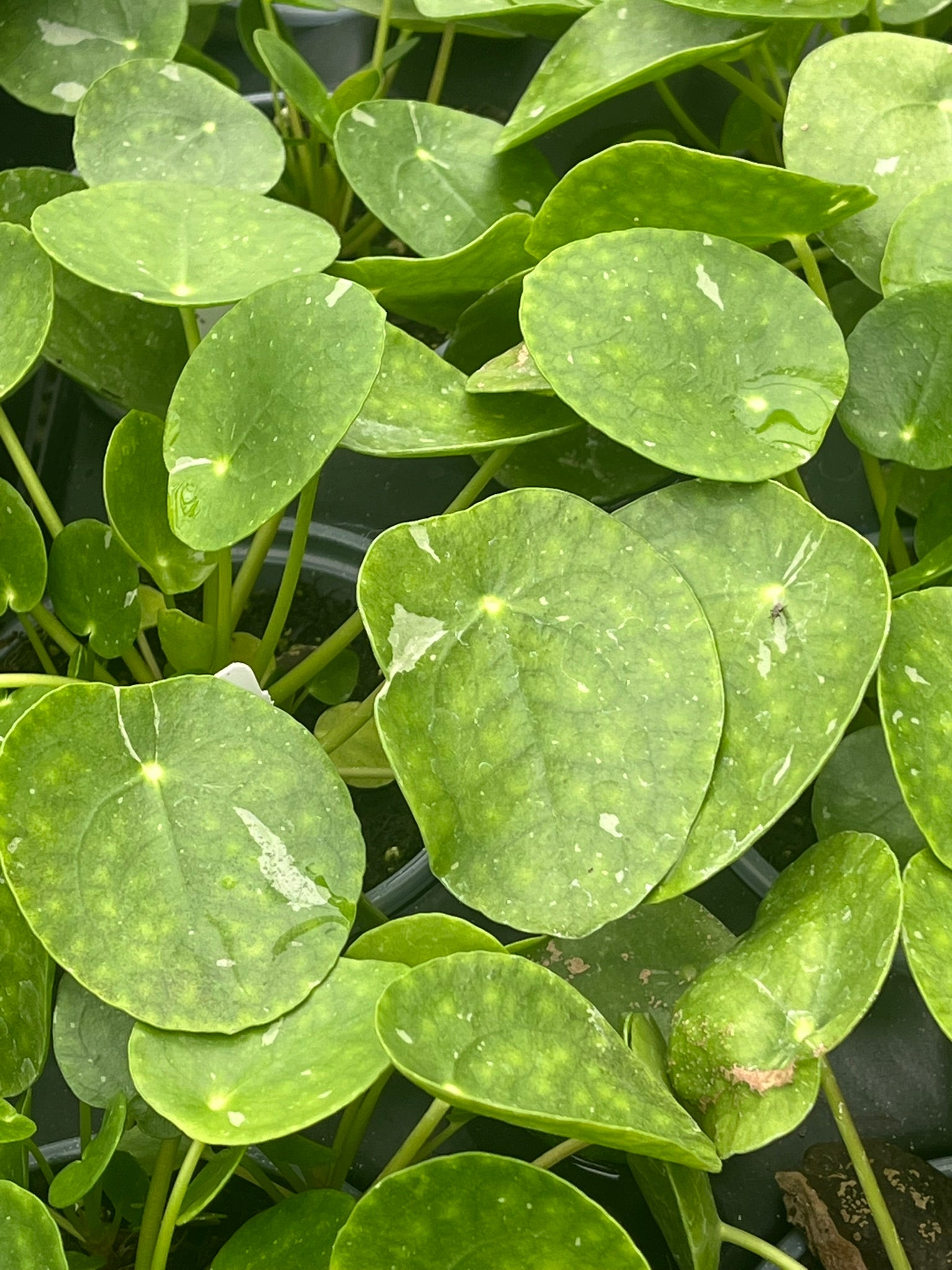
white and green money plant Pilea peperomioides, Variegated Chinese Money Plant ‘White Splash’Pilea peperomioides White Splash The Variegated Chinese Money Plant That Steals the Show Looking for a plant thats charming, easy to grow, and totally Instagram worthy? Let us introduce you to Pilea peperomioides White Splash, a rare and radiant version of the beloved Chinese Money Plant. This cultivar takes everything we love about the classic Pileathose round, pancake like leaves and upright, playful growthand adds stunning splashes of creamy white
Pilea peperomioides ‘White Splash’ – The Variegated Chinese Money Plant That Steals the Show
Looking for a plant that’s charming, easy to grow, and totally Instagram-worthy? Let us introduce you to Pilea peperomioides ‘White Splash’, a rare and radiant version of the beloved Chinese Money Plant. This cultivar takes everything we love about the classic Pilea—those round, pancake-like leaves and upright, playful growth—and adds stunning splashes of creamy white variegation to the mix.
Whether you're a seasoned houseplant collector or just dipping your toes into the world of indoor gardening, ‘White Splash’ is a perfect choice. It's cute, compact, and full of personality—but most of all, it’s easy to care for once you understand its needs.
Let’s explore what makes this plant so special, and how to keep it thriving.
Why Pilea ‘White Splash’ Is So Popular
There’s no mistaking it. The first thing you'll notice is the round, coin-shaped leaves—a symbol of prosperity and good fortune in Chinese culture. But what really sets ‘White Splash’ apart are the random streaks, dots, and patches of white on its otherwise green foliage.
No two leaves are ever the same. Some are lightly dusted, while others have bold paint-like splashes. This gives the whole plant a playful, artistic look that adds light and movement to any space.
Light Needs: Bright, Indirect Light
Variegated plants need a little more light than their all-green counterparts to maintain their unique coloring, and ‘White Splash’ is no exception.
-
Ideal location: A bright room near an east- or west-facing window.
-
Avoid direct afternoon sunlight—it can burn the leaves.
-
Too little light? You’ll see slower growth and less variegation.
-
A grow light can work great in darker spaces or during winter.
Rotate the plant every week or so to keep its shape even. It tends to lean toward the light.
Watering: Let It Dry a Bit Between Drinks
Pilea ‘White Splash’ likes a balance. It doesn’t want to sit in wet soil, but it doesn’t want to completely dry out either.
-
Water when the top 1–2 inches of soil feel dry.
-
In summer, you may water once a week. In winter, every 10–14 days may be enough.
-
Always use a pot with drainage holes. This prevents root rot.
Watch the leaves for signs:
-
Drooping? Usually a sign it’s thirsty.
-
Yellowing? That may be from overwatering.
Consistency is key. If you keep a routine, this plant will respond with steady, healthy growth.
Humidity and Temperature: Easygoing but Prefers Comfort
Pilea ‘White Splash’ is pretty adaptable to most indoor environments. But like most tropical plants, it appreciates warmth and a touch of humidity.
-
Ideal temperature: 65°F to 80°F
-
Humidity: 40%–60% is great
-
Avoid cold drafts and sudden temperature drops
-
In winter, group it with other plants or place it near a humidity tray if your air is dry
It’s hardy indoors, but happier when not exposed to dry heat or cold breezes.
Soil and Potting: Light and Well-Draining
To keep the roots healthy, use a soil mix that’s light and fast-draining. Think airy and loose—not compact.
Recommended soil mix:
-
2 parts potting soil
-
1 part perlite
-
1 part coco coir or orchid bark
Use a pot with drainage holes, and consider repotting every year or two to refresh the soil and make space for roots.
Feeding: A Bit of Plant Food Helps
Pilea ‘White Splash’ doesn’t need a lot of fertilizer, but a little bit helps support its growth and maintain those beautiful splashes of white.
-
Feed with a balanced, water-soluble fertilizer (like 10-10-10 or 20-20-20) diluted to half strength.
-
Fertilize once a month during spring and summer.
-
No need to feed in fall or winter when the plant slows down.
Avoid overfeeding—this can cause salt buildup or damage the delicate roots.
Growth Habit: Upright and Playful
This plant grows in a neat, upward habit with long petioles (leaf stems) that fan out in all directions. As it matures, it often forms a central stalk or “trunk,” giving it a palm-like appearance.
If your plant gets too leggy, that’s a sign it needs more light. You can trim older leaves to keep the plant compact and encourage new, bushier growth.
Propagation: Share the Wealth
One of the most delightful parts of growing Pilea is that it makes babies! These little offshoots, called “pups,” sprout up from the soil around the mother plant.
To propagate:
-
Wait until the pup is at least 2–3 inches tall.
-
Gently dig around it and snip it away with a sharp, clean knife.
-
Replant in a small pot with fresh soil.
-
Keep lightly moist until new roots develop.
It’s incredibly satisfying—and a fun way to share your plant love with friends and family.
Common Issues and Solutions
This plant is low-maintenance, but here are a few common problems to watch for:
Brown Leaf Edges
-
Cause: Dry air or inconsistent watering
-
Fix: Increase humidity, water on schedule
Leaf Drop
-
Cause: Sudden environmental changes or underwatering
-
Fix: Find a stable spot with consistent care
Faded Variegation
-
Cause: Too little light
-
Fix: Move it to a brighter spot (just avoid harsh sun)
Pests (rare)
-
Occasionally, you might see aphids, spider mites, or fungus gnats.
-
Treat with insecticidal soap, neem oil, or a quick rinse under the faucet.
Styling Ideas: How to Show Off Your ‘White Splash’
This plant shines in just about any space. Here are some fun ways to show it off:
-
Place it in a white or ceramic pot to complement the leaf splashes
-
Use it as a centerpiece on a desk, side table, or kitchen shelf
-
Pair it with green-leaved plants for dramatic contrast
-
Group with other variegated plants to create a collector’s corner
Because it stays compact, it’s perfect for apartments, offices, or small rooms.
A Plant That Brings Joy and Style
Pilea peperomioides ‘White Splash’ isn’t just another houseplant—it’s a conversation piece, a symbol of good luck, and a plant that grows with you. It’s friendly, forgiving, and full of charm.
Whether you’re building your indoor jungle or just looking for something beautiful to brighten your day, this little pancake-leafed wonder is up for the job. It’s the kind of plant that makes people smile—and best of all, it makes you feel like a plant pro, no matter your experience level.
Are you ready to let a little “splash” of joy into your home?
Shipping Notes
- Free Standard Shipping on $100+ Orders to the USA.
- Except Preorder products are shipped in 48 hours.
- Delivery to the USA:
- Standard Shipping : 3-10 business days
- If time is of the essence, please consider selecting expedited delivery for faster service.
Exchange/Return Notes
- We offer a 30-day return/exchange service after receiving.
- Final sale items are not eligible for returns or exchanges.
- To process your return/exchange, please contact us at [email protected]
- Please click here for more details>>> Return & Exchange Policy